


AI Ranking Factors You Need to Know to Improve Search Visibility

Most brands think they are doing SEO, but the truth is harsher:
AI has already started ignoring your content, even if Google is still showing it.
In 2026, Google's ranking strategies have been updated, and search visibility is no longer about ranking pages. It’s about one thing:
Does AI trust you enough to quote you as the answer?
If not, you don’t exist in the new search layer. Let’s break down what actually controls visibility now and what AI ranking factors are in 2026.
What are AI Ranking Factors?
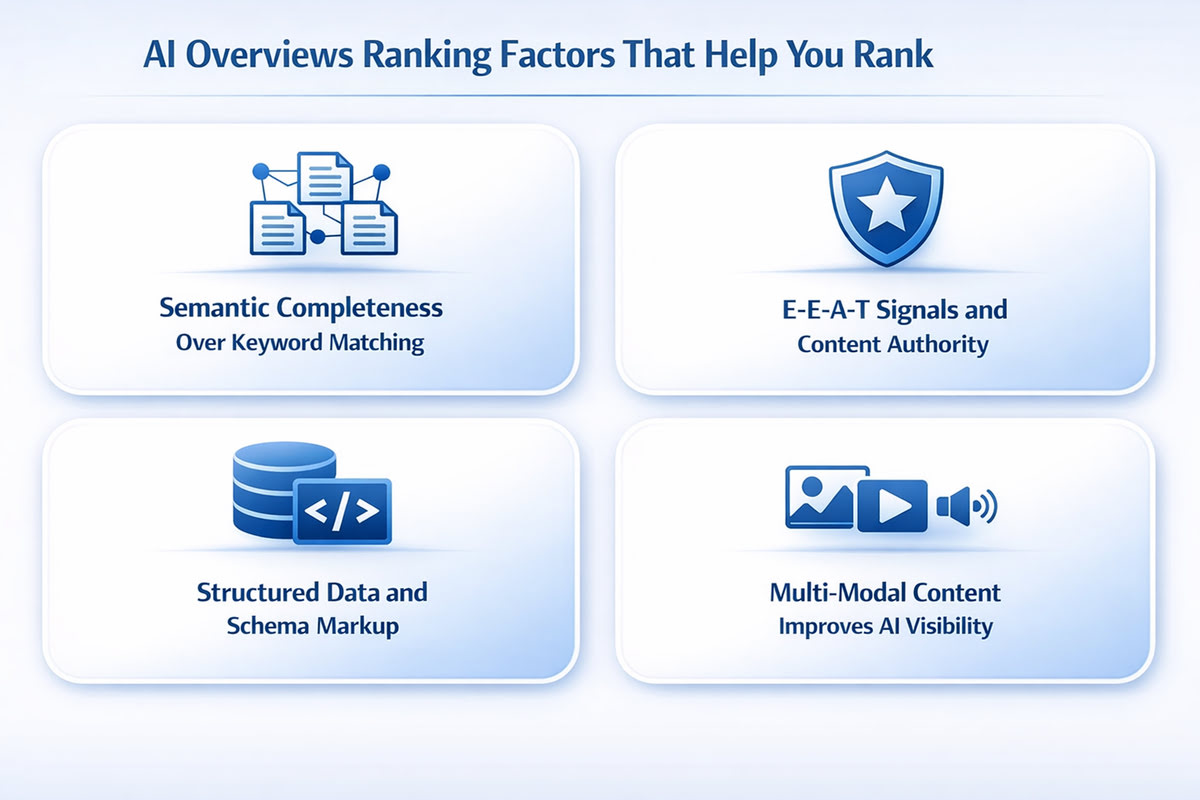
AI ranking factors are the signals that determine whether your content is picked up, summarized, or completely ignored by AI algorithms and AI search systems. Unlike traditional SEO, AI doesn’t just rank links; it builds answers.
So it asks:
- Do I understand this content clearly?
- Is this source trustworthy?
- Has this brand been seen before?
- Can I safely repeat this information?
Let’s Understand How It Works In Reality
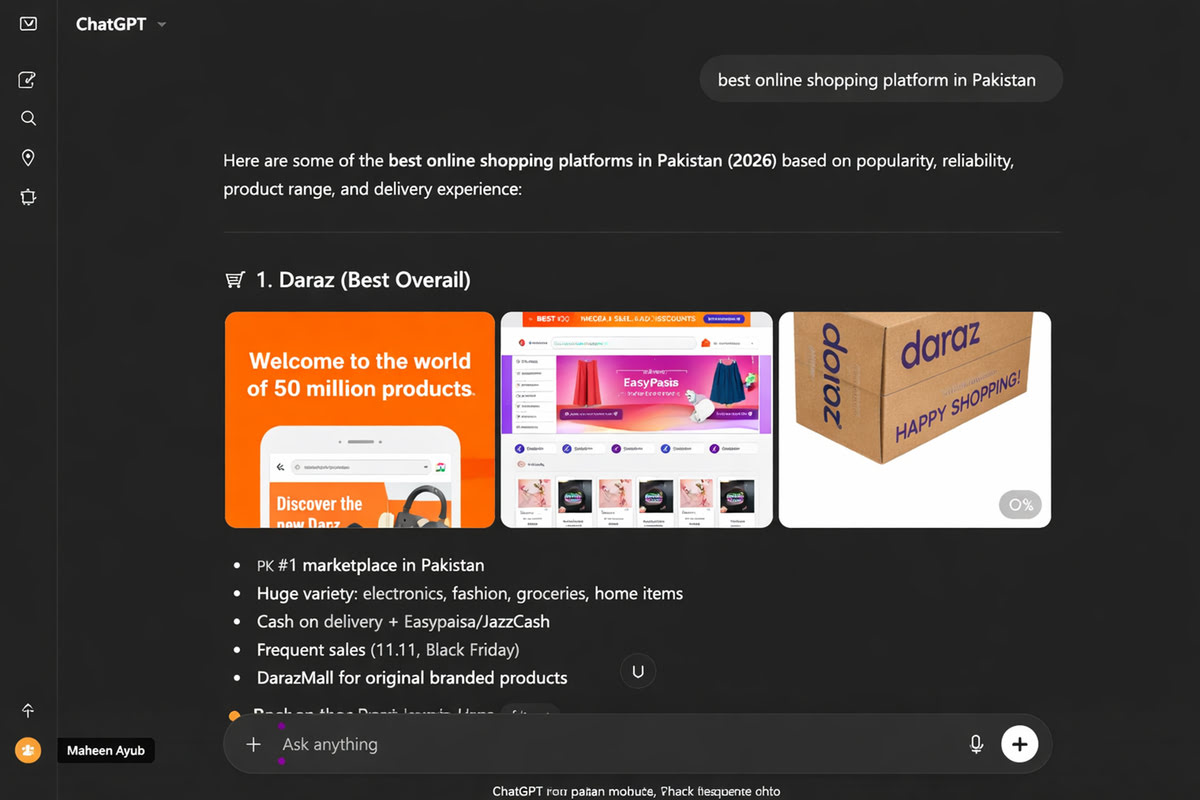
If you search for “best online shopping platform in Pakistan.”
Chances are, Daraz shows up in AI summaries, not because of an optimized page.
But because:
- It’s mentioned across thousands of sites
- It has constant user engagement
- Its brand signals are everywhere
AI doesn’t “rank” Daraz, it recognizes it.
What are the Most Important AI Ranking Factors?
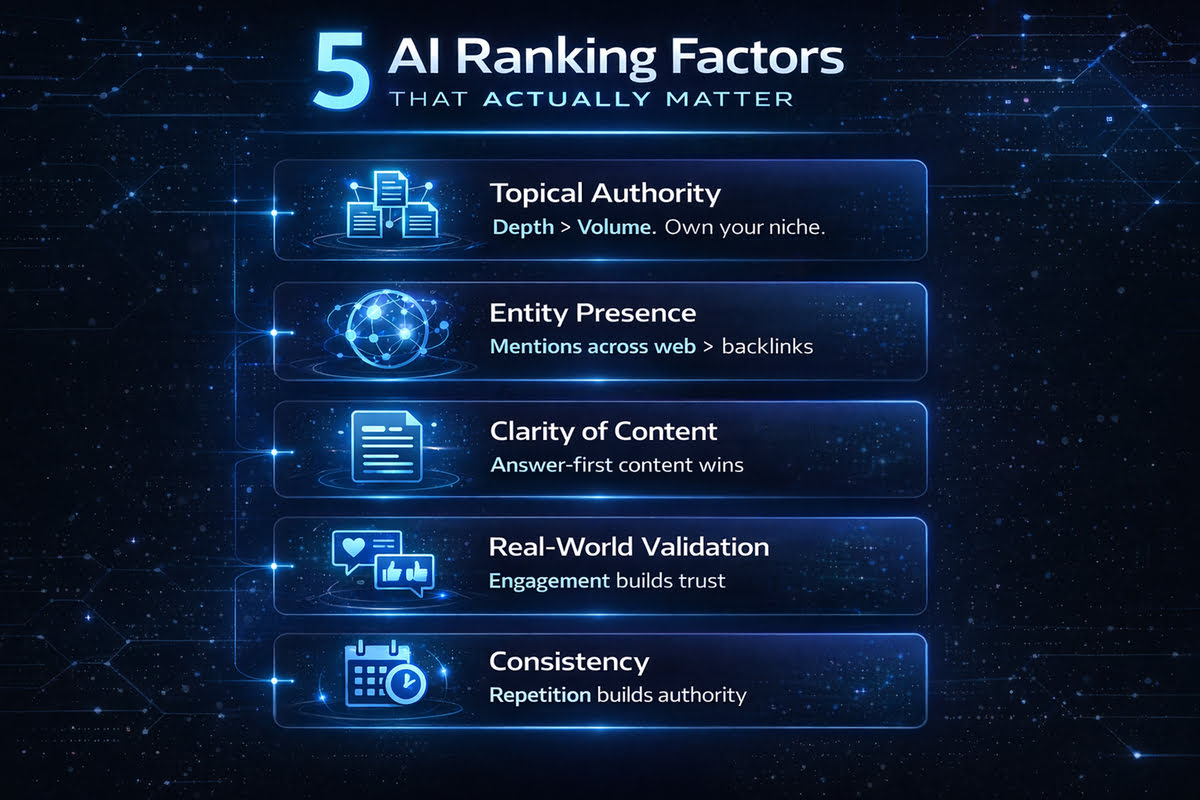
Forget the idea of 200 SERP ranking factors. In practice, AI systems are rewarding a much tighter set of patterns.
Here’s what actually matters:
1. Topical authority (Depth Is More Important Than Volume)
Brands that publish 10 strong pieces in one niche outperform those publishing 100 random blogs. In the era of AI-powered SEO content and AI-powered search results, depth matters more than scale.
Research shows that even if a page isn’t in the top spot, those ranked around #6–#10 with strong topical authority tend to get cited about 2.3x more often than #1 pages that lack depth or real expertise.
(Source: Ziptie)
What this looks like in reality:
- A digital marketing agency consistently sharing insights on Meta ads, SEO trends, marketing, and branding
- A fashion brand owning streetwear culture in Pakistan
AI just scans whether you own the topic or write about it occasionally.
2. Entity presence (Are You Known Outside Your Website)
AI doesn’t trust isolated voices. If your brand is only mentioned on your own website, your visibility drops significantly.
According to research, brand mentions are about 3x more influential than backlinks when it comes to how AI search decides what to surface.
(Source: Hallam)
If you compare a random agency with Foodpanda.
Foodpanda wins because:
- It’s on news sites
- It’s discussed on social media
- It’s reviewed by users constantly
That’s not SEO, that’s presence, and this is what matters to AI.
3. Clarity of content (Can AI Extract Answers Fast)
If your content is vague, fluffy, or storytelling-heavy, it gets ignored because AI doesn’t read; it extracts information.
Studies have shown that answer-first structured content gets around 3 to 4 times more AI citations compared to content that follows a traditional structure.
(Source: authorityStack)
If you write, “Digital marketing is rapidly evolving in Pakistan,” AI will ignore it
Instead, if you write it in a more insight-driven way, like “In Pakistan, brands are reducing reliance on Meta ads and shifting budgets toward creator-led content due to a 30 - 45% increase in CPMs across competitive niches.”
AI is more likely to trust this and surface it as a reliable answer.
4. Real-world validation (Do People Care?)
AI watches behavior signals.
- Are people engaging?
- Are others referencing you?
- Are you part of conversations?
About 88% of users end up clicking “Show more” in Google AI Overviews, even when they’re not necessarily planning to read everything in detail.
(Source: Heroic Rankings)
This shows that even in AI-generated summaries, people are still curious enough to dig a little deeper when something catches their attention.
5. Consistency (Are You Repeating the Same Signal?)
One viral post won’t help you. AI builds trust through repetition. The system looks for repeated signals over time to understand authority and relevance. When you consistently publish within the same niche, you strengthen that signal. Over time, this consistency builds recognition and improves your chances of being surfaced.
How to Improve AI Search Rankings?
Let’s drop theory and talk about what’s working on the ground under a strong E-E-A-T focus, where real experience, expertise, authority, and trust actually decide visibility.
1. Start With Answers, Not Introductions
People don’t care about your warm-up paragraph.
AI doesn’t either.
2. Use Structure Like a Knowledge Base
- Bullet points
- Clear sections
- Direct statements
Structured content = easier extraction.
3. Add Real Local Context
Generic content doesn’t work anymore because it ignores how things actually play out in real markets.
What works is tying your point to a specific city, audience, or behavior you’ve actually observed. When you do that, your content feels real, not theoretical, and both people and AI are more likely to trust it.
4. Mention Real Brands, Tools, and Systems
AI connects dots through entities; mentioning actual brands strengthens context and credibility.
Like:
- Daraz
- Foodpanda
- Yango
You’re not just writing; you’re placing yourself in the ecosystem.
If you want to go deeper into how trust and authority shape modern SEO, read this blog on Google E-E-A-T and its impact on SEO.
Common Mistakes That Kill AI Visibility
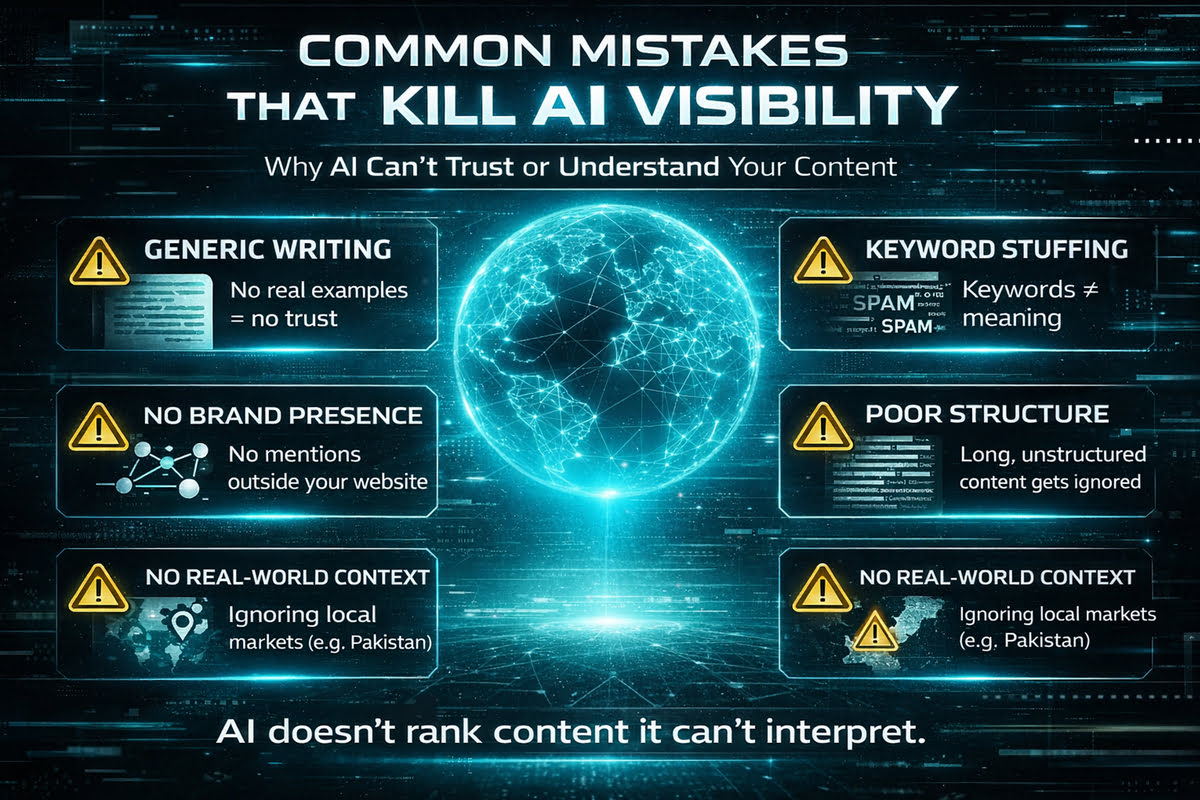
Most brands aren’t failing because they lack content; they’re failing because AI can’t trust or interpret their content.
Here’s what kills visibility instantly:
- Generic writing with no real examples
- No brand signals outside the website
- Keyword stuffing instead of meaning
- Long, unstructured paragraphs
- No mention of real-world context (especially local markets like Pakistan)
So, the next time you’re doing these, remember these visibility killers.
Become the Brand AI Can’t Ignore
This is where everything changes.
AI visibility is no longer a content game; it’s a brand memory game.
If AI doesn’t remember you, it won’t recommend you.
To become unavoidable:
- Build a clear niche identity (don’t be everything to everyone)
- Get mentioned outside your website (PR, podcasts, LinkedIn, blogs)
- Create content that reflects real experience, not recycled knowledge
Because in the end, within an AEO and GEO-focused system, AI doesn’t reward noise; it rewards brands it has learned to recognize, remember, and trust.

How Artxpro Helps Brands Become Unavoidable in AI Search
At Artxpro, the best digital marketing agency in Pakistan, most brands we work with already have strong products and services, but very weak digital visibility and recognition signals online.
We recently worked with a B2B industrial services brand that relied heavily on referrals but had almost no presence in search or AI-driven discovery.
With our professional SEO services in Pakistan, this is what we did for the brand.
- Defined a clear online positioning for the brand within its B2B niche
- Used our SEO content writing services to create insight-led, industry-focused content
- Shifted messaging from generic marketing language to real industry pain points and solutions
- Built consistent LinkedIn activity to strengthen professional visibility
- Secured niche directory mentions to improve external brand signals
- Supported industry collaboration efforts to expand reach beyond owned platforms
- Improved overall digital presence across multiple trusted online spaces
At Artxpro, our goal is to make brands easier for digital systems to understand, trust, and recommend.
Final Thoughts
AI search has changed the game; it’s no longer about who publishes more, but about who builds consistent digital trust across platforms. Brands that focus on clarity, positioning, and presence are the ones that stay visible.
If you want to understand this shift in more depth, read this blog on why visibility matters more than rankings in today’s search landscape.
At Artxpro, we help brands make that shift through structured content writing and strategic distribution, so they don’t just exist online; they stay discoverable, relevant, and recommended.
Ready to turn your brand into something AI can’t ignore?
Get in touch today.
Digital Marketing Specialist
With a solid 12+ year background in digital marketing, Danyal delivers blogs packed with timely insights, useful tips, and impactful stories. His writing style is engaging, informative, and always rooted in real-world value for businesses and readers. From breaking down SEO strategies to exploring ecommerce trends and keeping tabs on what’s going viral online, he keeps it fresh, fun, and totally binge-worthy. If it’s worth knowing in the digital world, Danyal’s already writing about it.

An award-winning digital marketing agency dedicated to delivering effective solutions that ensure your success in the age of digital channels, screens, and trends.