


Digital Marketing FAQs: Clear Answers to Your Most Common Questions

Are you confused about digital marketing? Do you have questions about SEO, social media, content, websites, or online growth strategies?
With so many digital channels and changing search trends, it can be difficult to understand what works, where to start, and which strategies can actually help your business grow.
This digital marketing FAQ guide answers common questions with practical explanations of how modern digital marketing works.
Let’s dig in!
Our Digital Marketing Experience
At Artxpro, a digital marketing agency, we help businesses across different industries improve their online visibility, attract qualified traffic, and develop effective digital strategies that support long-term growth.
Through our experience with SEO, content marketing, website optimization, ecommerce growth, and paid campaigns, we have learned that successful digital marketing requires more than using individual tools. It requires understanding customer behavior, analyzing data, testing strategies, and continuously improving campaigns.
For example, businesses often struggle because their websites attract visitors but fail to convert them into customers. By improving website structure, creating targeted content, optimizing user experience, and tracking performance metrics, businesses can create a stronger foundation for online growth.
Every business has different goals, audiences, and challenges, which is why digital marketing services should be customized instead of following a one-size-fits-all approach.
Topics Covered in This Digital Marketing FAQ Guide
The topics covered include:
- Digital Marketing
- Social Media Marketing
- Search Engine Optimization (SEO)
- Content Writing
- Website Design & Development
- Ecommerce Management
- AI in Digital Marketing
Digital Marketing
1. What Is Digital Marketing and How Does It Function?
Digital marketing refers to the use of internet-based methods to connect a business with its target audience. It can involve a company’s website, search engine visibility, social media activity, email campaigns, and online advertisements.
Unlike traditional marketing, digital marketing allows businesses to track user behavior, measure campaign performance, and optimize strategies based on real data. Businesses use different channels together to attract visitors, generate leads, and convert customers.
2. Why is Digital Marketing Important for Businesses?
Digital marketing helps businesses reach customers where they already spend their time: online. It provides measurable results compared to many traditional marketing methods.
Businesses can analyze:
- Website traffic
- Conversion rates
- Customer acquisition cost
- Campaign performance
This data helps companies improve their marketing decisions and allocate budgets more effectively.
3. How Is Digital Marketing Different From Traditional Marketing?
Digital marketing uses online platforms such as search engines, websites, social media, email, and digital advertising to reach customers. Traditional marketing relies on offline channels like television, newspapers, billboards, and print media.
The main differences are measurement and targeting. Digital marketing allows businesses to track user actions, test campaigns, and target specific audiences based on data.
For example, a company running Google Ads can measure clicks, conversions, and cost per lead, while a billboard campaign may provide limited information about how many people took action after seeing the advertisement.
Both approaches can support business goals, but digital marketing provides more detailed performance insights and optimization opportunities.
4. What Are the Main Types of Digital Marketing?
Digital marketing consists of multiple channels, and each channel supports a different business goal.
The major areas include:
- SEO for improving organic search visibility
- Social media marketing for audience engagement
- Content marketing for educating customers
- PPC advertising for targeted paid traffic
- Ecommerce marketing for online sales growth
5. How Much Does Digital Marketing Cost?
The cost of digital marketing depends on factors such as business goals, industry competition, required services, and marketing channels. A small business focusing on SEO and content marketing may have a different budget from a company investing in PPC campaigns, ecommerce management, and social media advertising. Expenses usually include website improvements, SEO, content creation, paid ads, social media management, and performance tracking.
Social Media Marketing
1. What is Social Media Marketing?
Social media marketing involves reaching and engaging customers through channels such as Facebook, Instagram, LinkedIn, TikTok, and X to support product promotion and brand communication. It includes organic activities such as posting content, responding to comments, and creating communities, along with paid campaigns designed to reach specific audiences.
A professional social media marketing agency helps businesses plan, manage, and optimize these activities to achieve better results.
2. Why is Social Media Important for Businesses?
Social media allows brands to interact directly with the people they want to reach. It helps brands communicate, showcase products, collect feedback, and create stronger customer relationships. A well-managed social media presence can also support other marketing efforts by driving website visits, increasing brand searches, and improving customer trust.
3. How Frequently Should Businesses Post on Social Media?
No single posting schedule suits every business. The ideal frequency depends on the platform, audience activity, and quality of the content. A consistent schedule with valuable content is usually more effective than publishing frequently without a clear purpose.
4. What Type of Content Performs Well on Social Media?
Content results can differ depending on the target market and industry. Common effective formats include educational posts, product demonstrations, behind-the-scenes content, customer stories, videos, and industry insights. Businesses should focus on creating content that solves problems or provides value instead of only promoting products.
5. How Can Businesses Measure Social Media Success?
Social media performance can be measured through engagement rate, reach, impressions, website clicks, leads, conversions, and customer interactions. The metrics that matter most can vary based on the campaign outcomes. Brand awareness campaigns and sales campaigns usually require different measurement approaches.
Search Engine Optimization
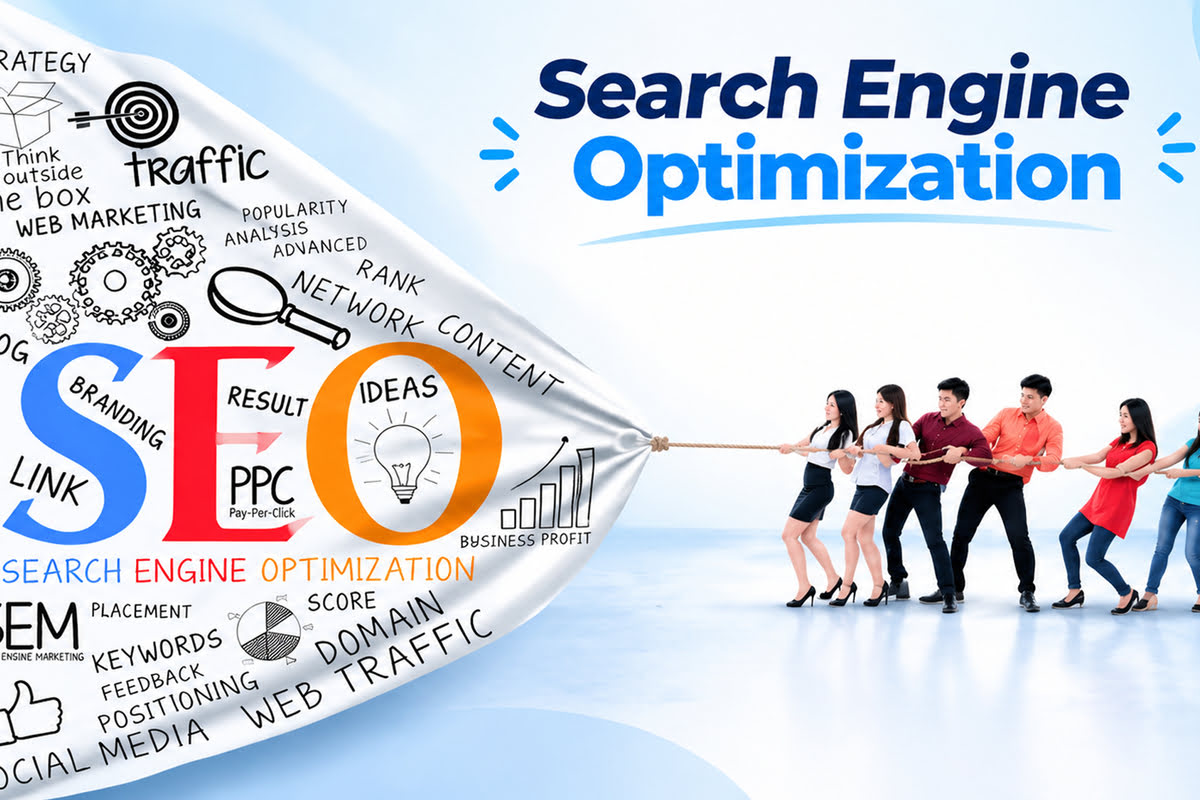
1. What Does SEO Mean and How Does It Work?
Search Engine Optimization (SEO) refers to techniques used to help websites appear more prominently in unpaid search engine listings. Professional SEO services involves optimizing website structure, content, technical performance, internal linking, and authority signals to help search engines understand and rank pages.
2. Why is SEO Important for Websites?
SEO helps businesses attract users who are actively searching for relevant products, services, or information. Unlike paid advertising, organic search traffic can continue generating visitors after content gains rankings. However, maintaining rankings requires ongoing optimization because search algorithms and competitors continue changing.
3. What Are the Main Types of SEO?
SEO is generally divided into three areas:
- On-page SEO focuses on content, headings, keywords, metadata, and internal links.
- Technical SEO improves website speed, indexing, crawling, structured data, and site architecture.
- Off-page SEO focuses on building website authority through backlinks, brand mentions, and other signals from external sources.
4. What is Answer Engine Optimization?
Answer Engine Optimization (AEO) helps organize website content so search engines and AI-based platforms can understand it and use it to answer user queries.
5. What is Generative Engine Optimization?
Generative Engine Optimization (GEO) involves optimizing online content so AI-powered search tools can understand, reference, and potentially use it in generated responses.
Businesses using GEO services in Pakistan can improve their online visibility by creating AI-friendly content, improving information accuracy, and making their websites easier for AI systems to understand.
6. What is the Difference Between SEO, AEO, and GEO?
- SEO aims to increase a website’s presence in conventional search engine results pages (SERPs).
- AEO focuses on providing direct answers to user questions through featured snippets, voice assistants, and answer-based search experiences.
- GEO focuses on preparing content for AI-powered search systems that generate answers using information from various sources.
The three approaches work in combination to expand search visibility across different digital platforms. A strong digital marketing strategy should not only aim for higher rankings but also ensure that content is understandable for users, search engines, and AI-powered platforms.

Content Writing
1. What is Content Writing in Digital Marketing?
Content writing involves creating useful written material that attracts, informs, and converts audiences.
SEO content writing services create reader-focused content that also helps search engines identify what a webpage is about and why it matters.
Examples of digital marketing content include:
- Blog articles
- Landing pages
- Service pages
- Product descriptions
- Case studies
- Whitepapers
- Email campaigns
- Website copy
2. Why Does Content Matter for SEO?
Relevant content helps search engines identify what a webpage covers. High-quality content helps websites target keywords, answer user questions, and build topical authority.
Modern SEO is not about repeating keywords multiple times on a page. Search engines evaluate whether content is useful, accurate, complete, and aligned with what users are actually looking for.
For example, a page about “leather jackets” should not only mention the keyword but also provide useful details about materials, fitting, styles, maintenance, and purchasing considerations.
3. What Are Keywords, and What Do They Do?
Search keywords are words or phrases users enter when searching online for answers, products, or services. They give search engines context about a webpage and help marketers target topics that interest their audience.
Keywords can be divided into different types:
- Short-tail keywords: These are broad search terms that usually have high search competition, such as “digital marketing.”
- Long-tail keywords: More specific searches with clearer intent, such as “best digital marketing agency for small businesses.”
- Transactional keywords: Searches showing buying intent, such as “buy leather jackets online.”
- Informational keywords: Searches where users want knowledge, such as “how does SEO work?”
4. What Makes Content High Quality?
Good content should demonstrate experience, accuracy, expertise, and usefulness. It should answer the reader’s question clearly instead of focusing only on keyword placement. Following Google’s E-E-A-T principles (Experience, Expertise, Authoritativeness, and Trustworthiness) helps businesses create content that users and search engines can trust.
5. Should AI-Generated Content Be Used for Blogs?
AI tools can help with content research, topic ideas, outlines, and editing, but they should support human expertise rather than replace it.
AI-generated content may lack personal experience, industry knowledge, original insights, and accurate context if it is published without proper review. Businesses should ensure that content includes human expertise, fact-checking, practical examples, and unique perspectives.

Website Design & Development
1. Why is Website Design Important?
A business website is often the first online touchpoint for potential customers. A well-designed website helps create a positive first impression, improves user experience, builds trust, and guides visitors toward taking desired actions such as making a purchase, submitting an inquiry, or contacting the business.
2. What Makes a Website SEO-Friendly?
SEO-friendly websites have:
- Fast loading speed
- Mobile responsiveness
- Proper website structure
- Clean URLs
- Optimized metadata
- Crawlable pages
When developing websites, Artxpro’s website design and development services focus on implementing SEO-friendly practices from the start, creating a strong foundation for better online visibility and long-term performance.
3. How Does Website Speed Affect Performance?
A fast-loading website can improve the browsing experience while supporting search rankings and conversions. A slow website can increase bounce rates and make visitors leave before taking action. Faster websites provide smoother browsing experiences, improve engagement, and help businesses achieve better online performance.
4. When Does a Website Need Redesign?
A website redesign may be necessary when an existing website no longer supports business goals or provides a poor user experience.
Signs that a website may need improvement include:
- Outdated visual design
- Poor mobile performance
- Slow loading speed
- Difficult navigation
- Low conversion rates
- Technical SEO issues
- Security concerns
5. What is the Difference Between Website Design and Development?
Website design and website development are two connected but different parts of creating a website.
Website design focuses on the visual appearance of a website and how users interact with it. It covers elements such as:
- Layout and page structure
- Colors and typography
- User interface (UI)
- User experience (UX)
- Navigation flow
Website development focuses on the technical side of the website and the functions that allow it to work properly. It covers areas such as:
- Coding and programming
- Database management
- Website performance optimization
- Third-party integrations
- Ecommerce functionality
- Security implementation
A successful website needs both an effective design and a well-developed technical foundation.

Ecommerce Management
1. What is Ecommerce Management?
Ecommerce management refers to managing all aspects of an online store, including product listings, inventory control, customer experience, order processing, marketing activities, and sales optimization.
Effective ecommerce store management helps businesses maintain smooth operations, improve customer satisfaction, and increase overall sales performance. It also includes monitoring key metrics such as conversion rate, average order value, cart abandonment rate, customer retention, and revenue performance.
2. How Can Ecommerce Stores Increase Sales?
Ecommerce stores can increase sales by improving both customer experience and marketing performance.
A strong ecommerce growth strategy usually focuses on:
- Well-optimized product pages feature clear, detailed descriptions along with high-quality product images
- SEO for product and category pages
- Faster website performance and mobile-friendly shopping experience
- Customer reviews and trust signals
- Simplified checkout process
- Personalized recommendations and remarketing campaigns
3. Why Are Product Descriptions Important?
Product descriptions help customers understand what a product offers, why it is useful, and how it compares with alternatives.
A well-written product description should explain important details such as features, materials, specifications, benefits, and usage information. It also helps search engines understand the product page and improves the chances of appearing for relevant search queries.
4. How Can Businesses Improve Sales on Amazon?
Amazon sales growth depends on both visibility and conversion optimization.
Businesses can improve performance by creating optimized product listings, using high-quality product images, maintaining competitive pricing, and collecting genuine customer reviews.
Amazon PPC advertising also plays an important role by helping products appear for targeted searches. Sellers should regularly analyze advertising data, keyword performance, and customer behavior to improve campaigns and reduce wasted spending.
5. What Ecommerce Mistakes Should Businesses Avoid?
Many ecommerce stores struggle because of poor user experience rather than a lack of products.
Common mistakes include:
- Low-quality product images
- Missing or duplicate product descriptions
- Slow website speed
- Complicated checkout process
- Lack of customer reviews
- Poor mobile experience
- Weak trust signals such as missing policies or contact information
Artificial Intelligence (AI) in Digital Marketing
1. What is AI in Digital Marketing?
Artificial Intelligence (AI) in digital marketing refers to the use of AI technologies to analyze data, automate repetitive tasks, understand customer behavior, and improve marketing decisions.
Businesses use AI across different areas of digital marketing, including SEO, content creation, advertising, customer support, and ecommerce. An AI marketing agency helps businesses use these technologies to improve campaign performance, analyze customer data, and create more effective digital marketing strategies.
AI allows marketers to process large amounts of information quickly, identify patterns, and make data-driven decisions that improve customer experiences and marketing results.
2. How Is AI Changing Digital Marketing?
AI is changing how businesses plan, create, and optimize their digital marketing activities. Instead of relying only on manual research and assumptions, marketers can use AI tools to analyze data, understand customer behavior, create marketing assets, and improve campaign performance.
Businesses are using AI for different digital marketing tasks, including content creation, where AI tools can help generate blog outlines, social media posts, product descriptions, email drafts, and content ideas.
AI is also being used for visual content creation. Businesses can generate images, edit graphics, create marketing designs, and produce video content for websites, advertisements, and social media platforms.
3. Can AI Replace Digital Marketers?
AI can automate many repetitive marketing tasks, but it does not replace the need for human marketers. Strategy development, creative thinking, understanding customer behavior, and making business decisions still require human involvement.
The role of marketers is changing from manually completing every task to using AI tools more effectively for research, analysis, and optimization.
4. What Are the Top AI Tools for Digital Marketing?
Several AI tools help businesses improve different areas of digital marketing, including content creation, SEO, design, automation, and analytics.
Some commonly used AI tools include:
- ChatGPT for content ideas, research, writing assistance, and marketing strategies
- Jasper for AI-assisted marketing content creation
- Surfer SEO for content optimization and SEO analysis
- Semrush AI Tools for keyword research, competitor analysis, and SEO insights
- Canva AI for creating marketing designs, images, and social media visuals
- Adobe Firefly for AI-powered image generation and creative design
- HubSpot AI for marketing automation, customer management, and content assistance
- Grammarly AI for improving writing quality and communication
The right AI tool depends on business goals and marketing requirements.
5. What Role Does AI Play in Digital Marketing?
AI helps businesses improve their digital marketing efforts by automating repetitive tasks, analyzing large amounts of data, and creating more personalized customer experiences.
Some key benefits of AI in digital marketing include faster content creation, better audience insights, improved campaign optimization, automated customer support, and more efficient decision-making.
By using AI tools effectively, marketers can save time, improve productivity, and focus more on strategy, creativity, and customer relationships.
Why Trust Our Digital Marketing Insights?
This guide is created by the Artxpro digital marketing team based on practical knowledge of SEO, content marketing, website optimization, ecommerce management, and online advertising.
Our approach focuses on data-driven strategies, industry best practices, and continuous learning as digital platforms and search technologies evolve.
We believe effective digital marketing should be transparent, measurable, and focused on real business outcomes. Instead of focusing only on rankings or traffic, we analyze important performance indicators such as user engagement, leads, conversions, and customer growth.
Still Have Questions About Digital Marketing?
These digital marketing FAQs cover the basics, but every business has different goals, challenges, and requirements. If you have specific questions about your brand’s digital marketing strategy, Artxpro is here to help you find the right approach.
Book a free consultation!
Digital Marketing Specialist
With a solid 12+ year background in digital marketing, Danyal delivers blogs packed with timely insights, useful tips, and impactful stories. His writing style is engaging, informative, and always rooted in real-world value for businesses and readers. From breaking down SEO strategies to exploring ecommerce trends and keeping tabs on what’s going viral online, he keeps it fresh, fun, and totally binge-worthy. If it’s worth knowing in the digital world, Danyal’s already writing about it.

An award-winning digital marketing agency dedicated to delivering effective solutions that ensure your success in the age of digital channels, screens, and trends.