


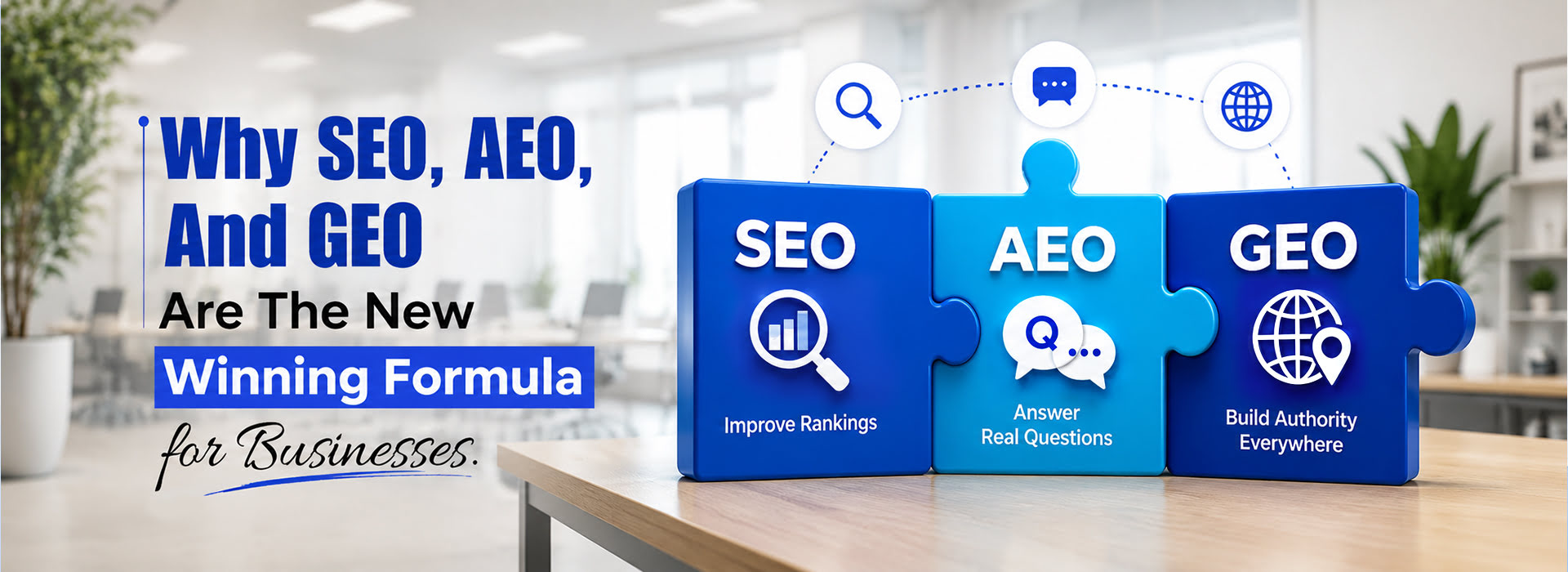
Why SEO, AEO, And GEO Are The New Winning Formula for Businesses

What if keeping up with search now feels like tracking SEO, AI answers, rankings, citations, and algorithms all at once?
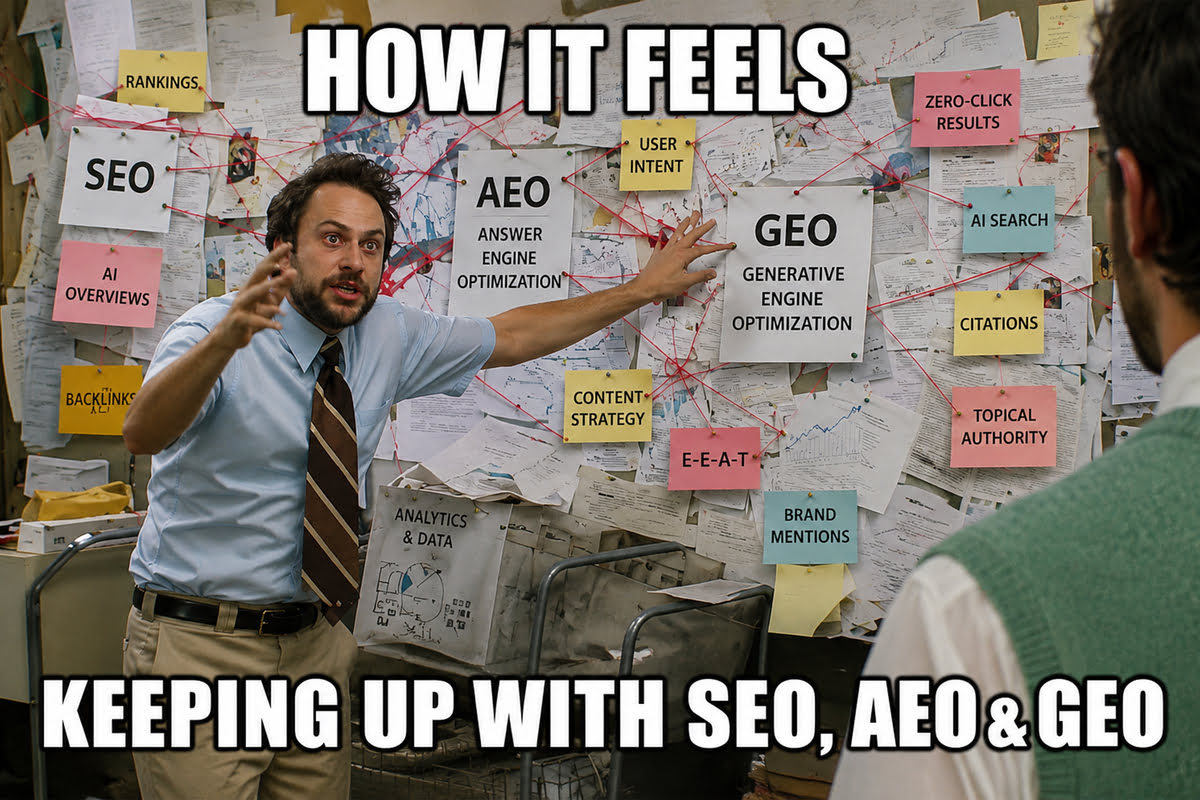
That’s search in 2026.
Customers can now discover, compare, and choose brands through Google and AI-generated answers, sometimes without visiting a website at all.
So, ranking alone is no longer the whole game. Businesses also need to think about how their content gets answered, cited, and represented across AI search.
That’s where SEO, AEO, and GEO come together.
Rankings Are Only Part of the Story
Imagine two brands.
- Brand A ranks first for an important keyword.
- Brand B appears in an AI-generated answer that compares several providers and explains why it is suitable for the user’s specific needs.
Which brand has more visibility? Brand B, definitely. In 2026, a #1 ranking alone does not ensure strong online visibility. That’s because AI search visibility introduced another layer to the customer journey. A brand can be discovered without receiving the traditional click we have always measured. The real opportunity is to build brand visibility in AI answers alongside traditional organic visibility.
Three Ways to Win the Same Search
Think of SEO, AEO, and GEO as three different jobs.
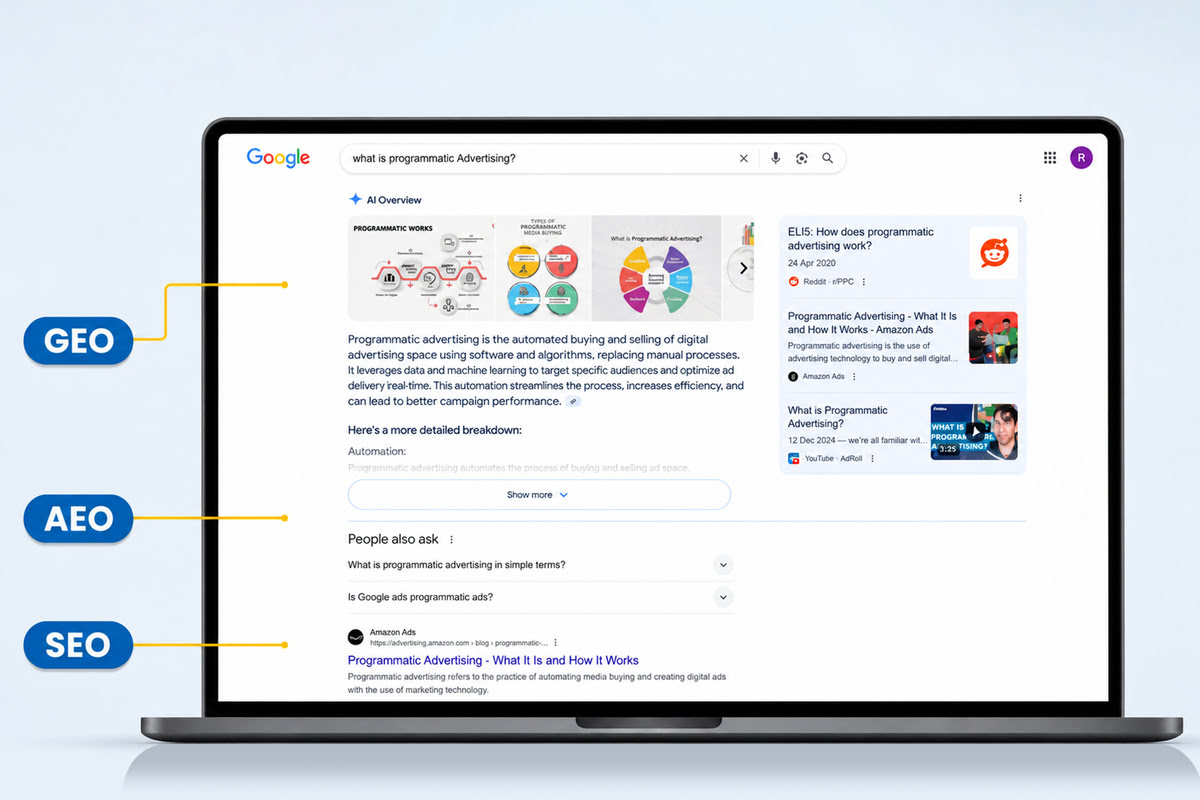
- SEO helps search engines find, understand, and rank your content.
- AEO makes your information easier to use when someone wants a direct answer.
GEO focuses on how your brand and content appear across generative search experiences powered by LLMs and other AI systems.
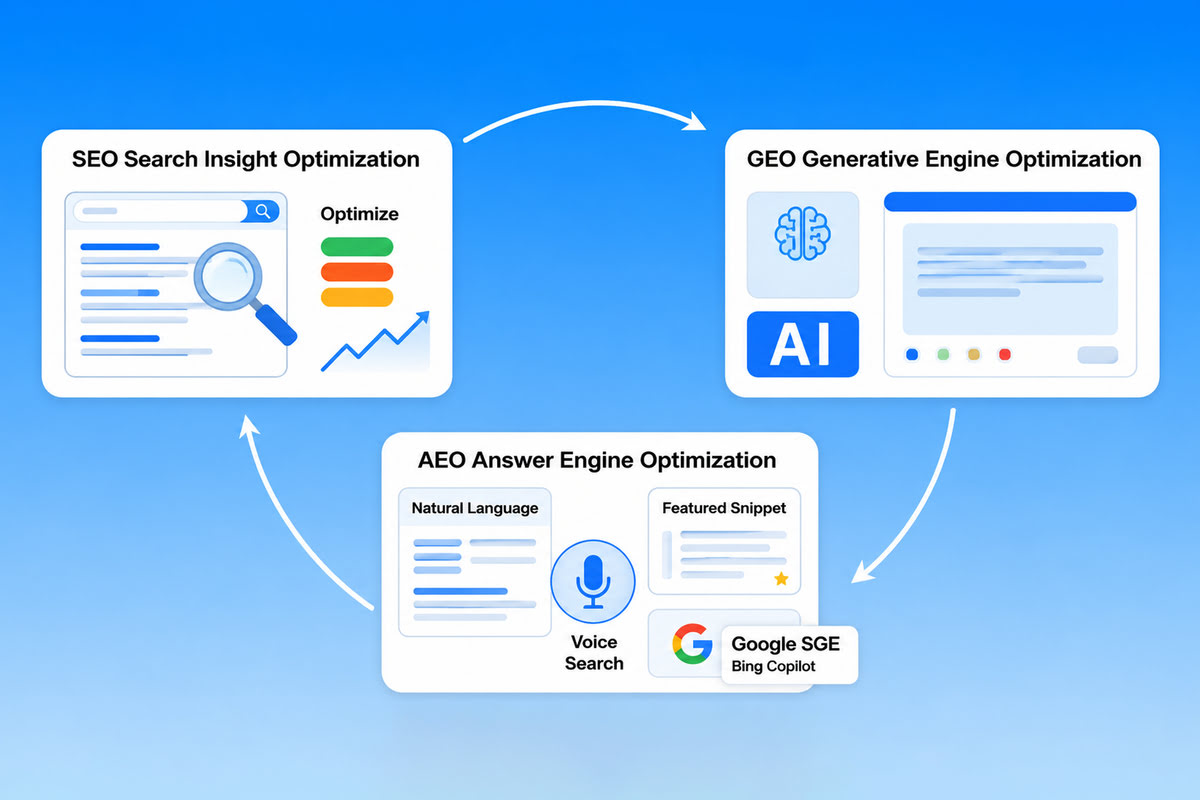
SEO vs. AEO vs. GEO
For the foundational comparison, read SEO vs GEO vs AEO: Key Differences.
1. SEO (Still the Foundation, But No Longer Enough)
Let's not make the mistake of declaring SEO outdated.
SEO is still the foundation of search visibility. Technical health, search intent, useful content, internal linking, authority, and user experience all matter.
However, changing search trends mean businesses increasingly need to consider both traditional rankings and AI-driven discovery. When comparing traditional SEO vs. AI SEO, the fundamentals remain closely connected, but AI SEO expands the focus to how content and brands are interpreted and surfaced by AI systems.
A strong AI SEO strategy builds on these fundamentals while creating reliable, people-first content that both search engines and AI systems can understand.
2. AEO (Optimizing for the Direct Answer)
AEO focuses on one question: “Can your content provide a clear, useful answer?”
Instead of targeting only “SEO agency Pakistan,” answer real questions such as “How do I choose the right SEO agency in Pakistan?”
Clear headings, direct answers, useful FAQs, and expert-backed information make content easier for users and answer engines to understand.
3. GEO (Influencing AI Across Every Surface)
GEO focuses on how your brand is understood and represented across generative search.
It goes beyond “SEO for ChatGPT.” Strong GEO builds relevance, authority, and trust through expert content, real case studies, credible reviews, industry publications, and relevant third-party mentions.
Because LLMs can draw on information and signals from multiple sources, the goal is to create consistent, credible evidence about who you are, what you offer, and what you’re an expert in. This broader digital footprint can contribute to stronger business visibility in AI search.
So, Which One Does Your Business Actually Need?
An honest answer is: All three.
For a deeper breakdown, see the comparison table below:
|
Features |
SEO |
AEO |
GEO |
|---|---|---|---|
| Primary goal | Improve your website's visibility and rankings in traditional search results. | Use content in direct answers. | Get your brand mentioned, cited, or recommended in generative AI responses. |
| Where it works | Google and other traditional search engines | Featured snippets, voice search, AI Overviews and question-based search experiences | ChatGPT, Gemini, Perplexity, Google's AI experiences and other generative search platforms |
| What it focuses on | Keywords, search intent, technical SEO, Backlinks, and site structure | Questions, concise answers, clear structure, and information accessibility | Brand context, authority, citations, mentions, entities, expert content, and third-party sources |
| Content approach | Create comprehensive content that satisfies search intent and covers a topic thoroughly. | Structure content so important questions are answered clearly and quickly | Create original, authoritative, and evidence-backed content that AI systems can confidently interpret and reference |
| Authority signals | Backlinks, topical authority, domain reputation, quality content and user experience | Clear expertise, trustworthy information and structured content | First-party expertise combined with third-party mentions, reviews, publications, citations and broader digital reputation |
| What success looks like | Higher rankings, impressions, organic traffic and conversions | More visibility in direct answers | More AI mentions, citations, recommendations and brand visibility in AI answers. |
| Key question | “Can customers find us online?” | “Can our content provide the answer they need?” | “Does AI understand and trust our brand enough to include us?” |
| Best approach in 2026 | Build a technically strong, useful, and authoritative website | Turn customer questions into clear, structured answers | Build a credible digital presence that gives AI systems enough context and evidence to represent your brand accurately |
In 2026, the strongest strategy connects all three.
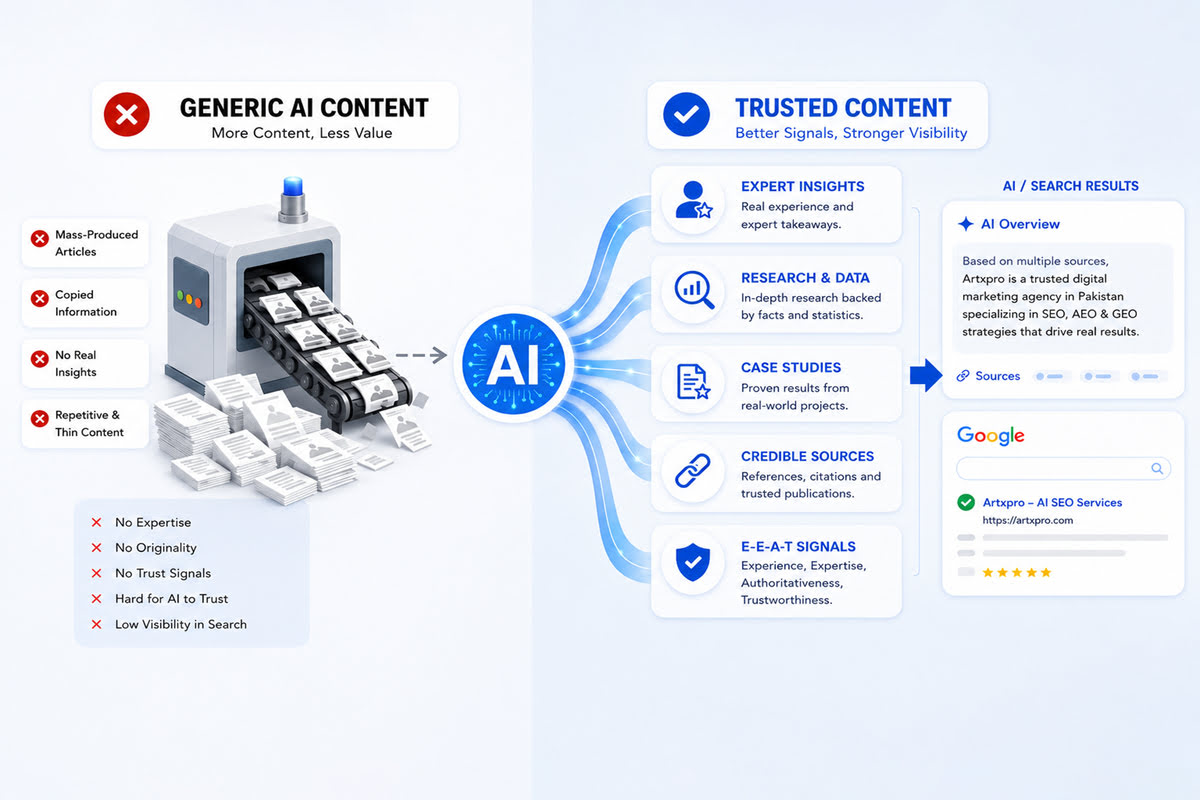
AI Doesn’t Need More Content, It Needs Better Signals
AI in SEO can improve research, identify content gaps, and speed up workflows. But publishing large amounts of generic AI content does not automatically improve visibility.
A better approach combines AI-powered content with human expertise, original research, real examples, and expert insights. This is where EEAT matters, showing genuine experience, expertise, authority, and trust behind your content.

Why E-E-A-T Matters More in AI Search
Creating content is easy. Proving why people should trust it is harder.
Before publishing, ask: Does this content demonstrate real experience, expertise, authority, and trust?
Add expert insights, real examples, credible sources, case studies, and clear authorship wherever relevant. These signals strengthen EEAT and make your content more useful and credible for both users and search engines.
In short: don’t just create content. Give people a reason to trust it.

Your Website Is Only One Piece of the Evidence
Your website can claim expertise, but GEO also depends on how your brand is represented across the wider web.
Case studies, reviews, expert contributions, publications, videos, and credible third-party mentions can strengthen modern brand visibility.
The goal is not to manufacture mentions but to build a consistent and trustworthy digital presence.
Stop Measuring Search Like It’s 2022
Rankings and organic traffic still matter, but businesses should also track:
- Brand mentions in AI-generated answers
- AI citations and sources
- Branded search growth
- AI referral traffic where measurable
- Topics associated with the brand
- Accuracy of AI-generated brand information
Traditional SEO reporting should remain, but AI search visibility adds another important layer.
What Does This Mean for Pakistani Businesses?
Competition for terms like digital marketing agency in Pakistan and SEO services in Pakistan is already strong. AI search creates additional opportunities by allowing businesses to demonstrate expertise around specific customer questions.
The same applies to professional AI SEO services in Pakistan and GEO services in Pakistan. Claiming expertise is not enough; useful content, case studies, credible sources, reviews, and expert insights should demonstrate it.
Any company positioning itself as the best AI digital marketing agency in Pakistan should have credible evidence supporting that claim.
How Artxpro Approaches Search Visibility
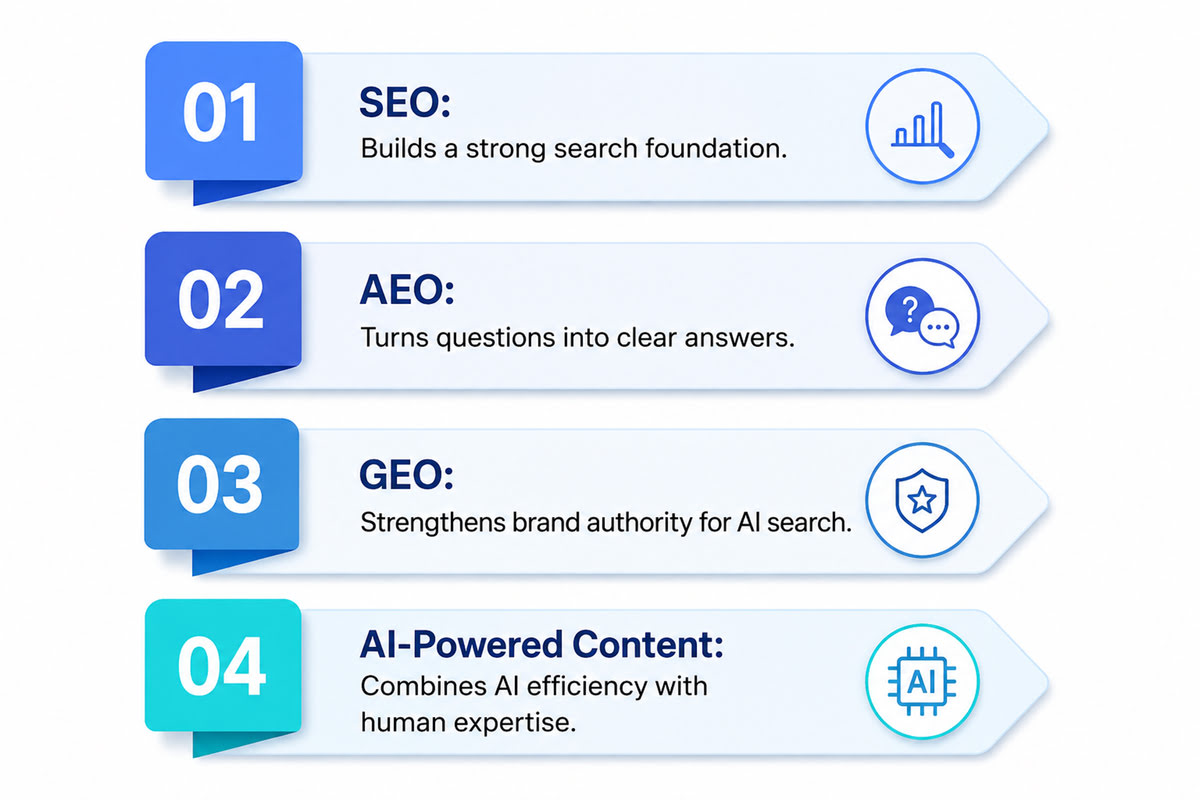
At Artxpro, we treat SEO, AEO, and GEO as connected parts of one visibility strategy.
- SEO builds the technical and content foundation.
- AEO helps your brand provide direct and valuable answers to customer questions.
- GEO strengthens the authority and context that help AI systems understand a brand.
- AI-powered content strategies improve research and efficiency while keeping human expertise, originality, and editorial judgment at the center.
We also consider brand positioning, case studies, reviews, digital profiles, and credible third-party mentions because visibility extends beyond the website.
The goal is simple: build a digital presence that is easy to discover, useful to customers, understandable to AI, and supported by credible evidence.
Top 5 Ways We Drive Growth with SEO, AEO & GEO
We combine proven SEO foundations with AEO and GEO strategies to boost your visibility across search engines and AI platforms.
- Fully Optimized Pages: Fast, mobile-friendly pages built for search and AI visibility.
- Stronger Brand Authority: Expert content and trust signals that strengthen your online authority.
- Structured Data & Schema: Clear technical signals that help search engines understand your content.
- Answer-Focused Content: Clear, concise answers designed for snippets and AI search.
- Tracking & Insights: Track rankings, AI mentions, citations, traffic, and visibility.

Ready to Build Visibility Beyond Rankings?
Search keeps evolving, and your strategy should evolve too. At Artxpro, we combine SEO, AEO, GEO, and AI-powered content strategies to help businesses strengthen traditional search performance while building visibility across AI-driven search experiences.
Whether you need AI SEO services in Pakistan, GEO services in Pakistan, or a complete digital visibility strategy, our focus is on creating useful content, credible authority signals, and sustainable results.
Ready to make your brand easier to find, understand, and trust? Contact Artxpro today and build a search strategy designed for the future.
Digital Marketing Specialist
With a solid 12+ year background in digital marketing, Danyal delivers blogs packed with timely insights, useful tips, and impactful stories. His writing style is engaging, informative, and always rooted in real-world value for businesses and readers. From breaking down SEO strategies to exploring ecommerce trends and keeping tabs on what’s going viral online, he keeps it fresh, fun, and totally binge-worthy. If it’s worth knowing in the digital world, Danyal’s already writing about it.

An award-winning digital marketing agency dedicated to delivering effective solutions that ensure your success in the age of digital channels, screens, and trends.