


The Technical SEO Guide to Crawling, Indexing, and Ranking Optimization

Most SEO conversations start with keywords and content. But in reality, Google can’t rank what it can’t reliably access, interpret, and trust. Technical SEO is not a checklist; it’s a system of crawl efficiency, index prioritization, and signal consolidation.
The gap is massive: a significant portion of websites struggle with search engine rankings, not because of weak content, but because of structural inefficiencies within the technical aspects of a website that suppress discovery and indexing. This is where consistent technical SEO fixes and long-term technical SEO strategies make the difference.
Let’s break it down properly, how search engines actually move from discovery to understanding and then ranking.
How Do Search Engines Work?
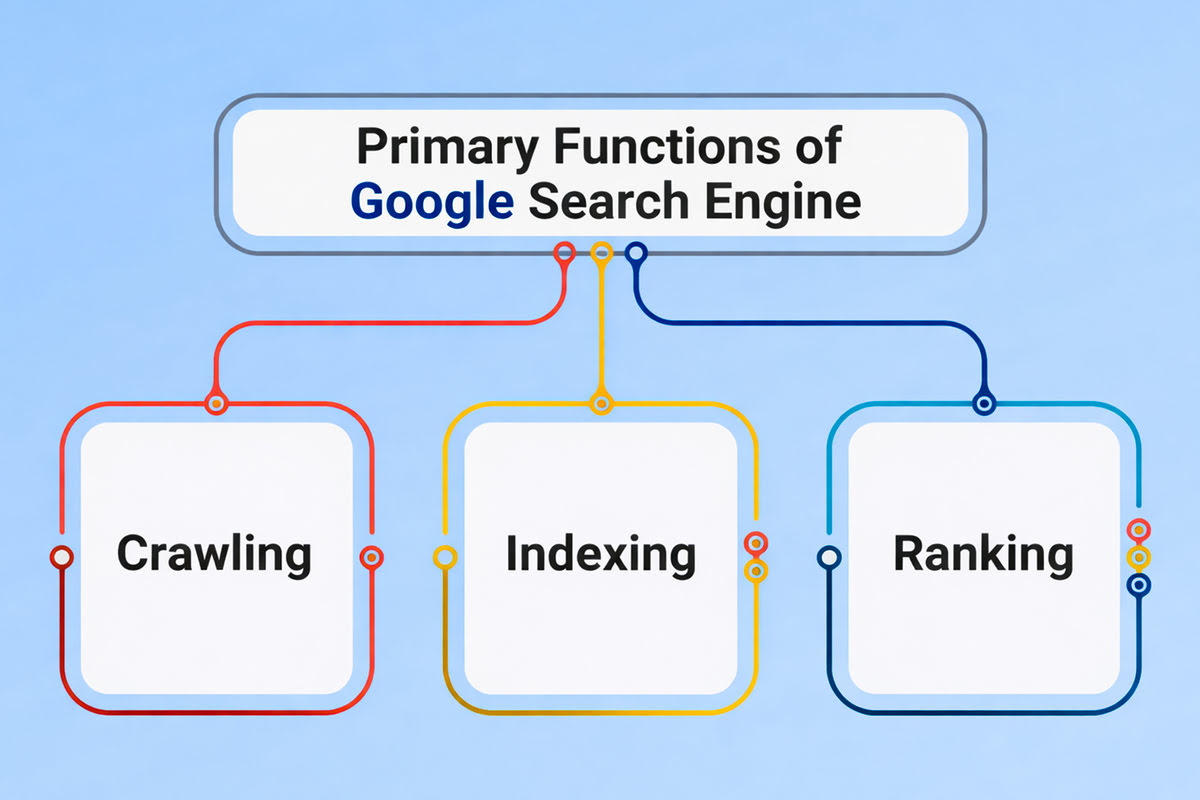
Search engines operate through three primary processes:
1. Crawling
Search engines use automated programs (called crawlers or spiders) to scan the internet. They discover content by following links and analyzing the code and structure of web pages.
2. Indexing
Once content is found, it is stored and organized in a massive database called an index. Only pages that are indexed can appear in search results for relevant queries.
3. Ranking
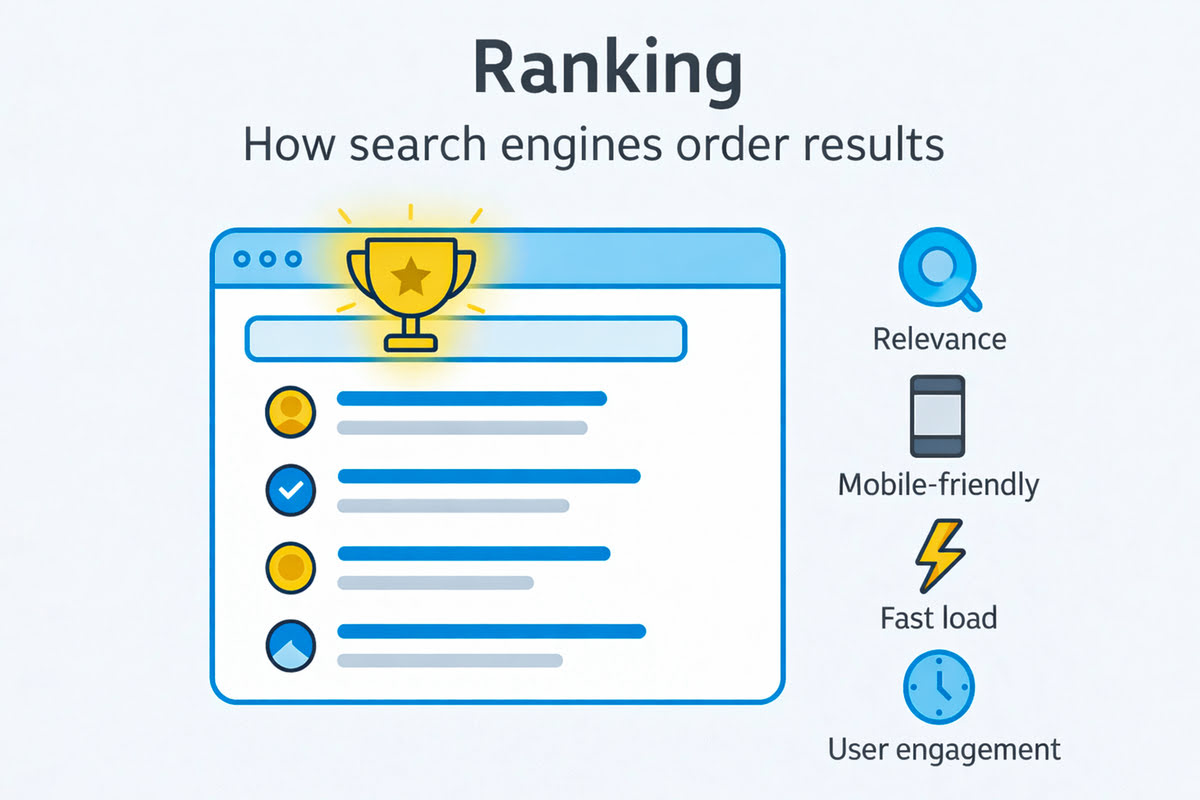
When a user searches, the engine sorts indexed pages based on relevance and quality. The most useful and relevant content appears at the top, while less relevant results follow.
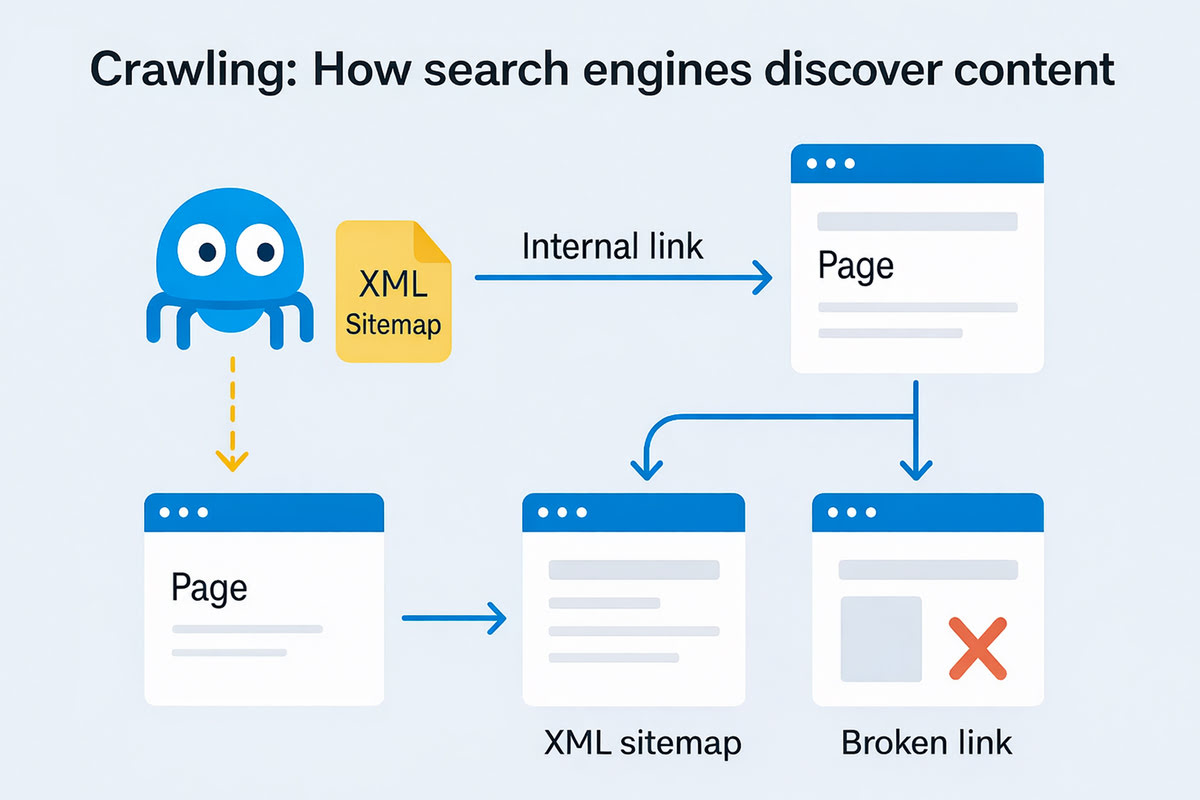
Crawling: How Google Encounters Your Website
Crawling is commonly oversimplified as Google “finding your pages.”
But in reality, Google already knows the web is massive; it simply chooses what deserves attention.
Your job is not to make pages exist; your job is to make the right pages easy to reach, and this is one of the core technical SEO strategies.
Why Google Doesn’t Crawl Everything
Googlebot works with limited resources.
So, it prioritizes:
- Strong internal link paths
- Frequently updated pages
- Clean and predictable site structures
And ignores:
- Deep or isolated pages
- Duplicate URL variations
- Unclear or messy structures
Crawling is less about access, more about the efficiency of the structure. Poor structure often leads to crawl error issues, which directly reduces your search visibility.
According to Google Insights, Faceted navigation accounts for nearly 50% of crawling inefficiencies, resulting in multiple URLs with identical content.
(Source: Another Concept)
What Actually Shapes Crawling Behavior
Instead of thinking “how do I get crawled,” think:
- Are my important pages easy to reach in a few clicks?
- Am I accidentally creating unnecessary URL paths?
- Does my site guide bots or confuse them?
Even something as simple as internal linking can decide whether a page becomes visible or forgotten. These are the kinds of insights uncovered during a proper technical SEO audit.
What Smart Platforms Do Differently
Take Amazon as a classic example.
With millions of pages, they don’t try to get everything crawled equally. Instead, they:
- Control URL parameters (filters like size, color, price)
- Use canonical tags to consolidate duplicates
- Prioritize category and product pages that drive revenue
Without this, their crawl paths would become infinite.
The insight here is simple: Crawling improves not when you add more pages, but when you remove confusion.
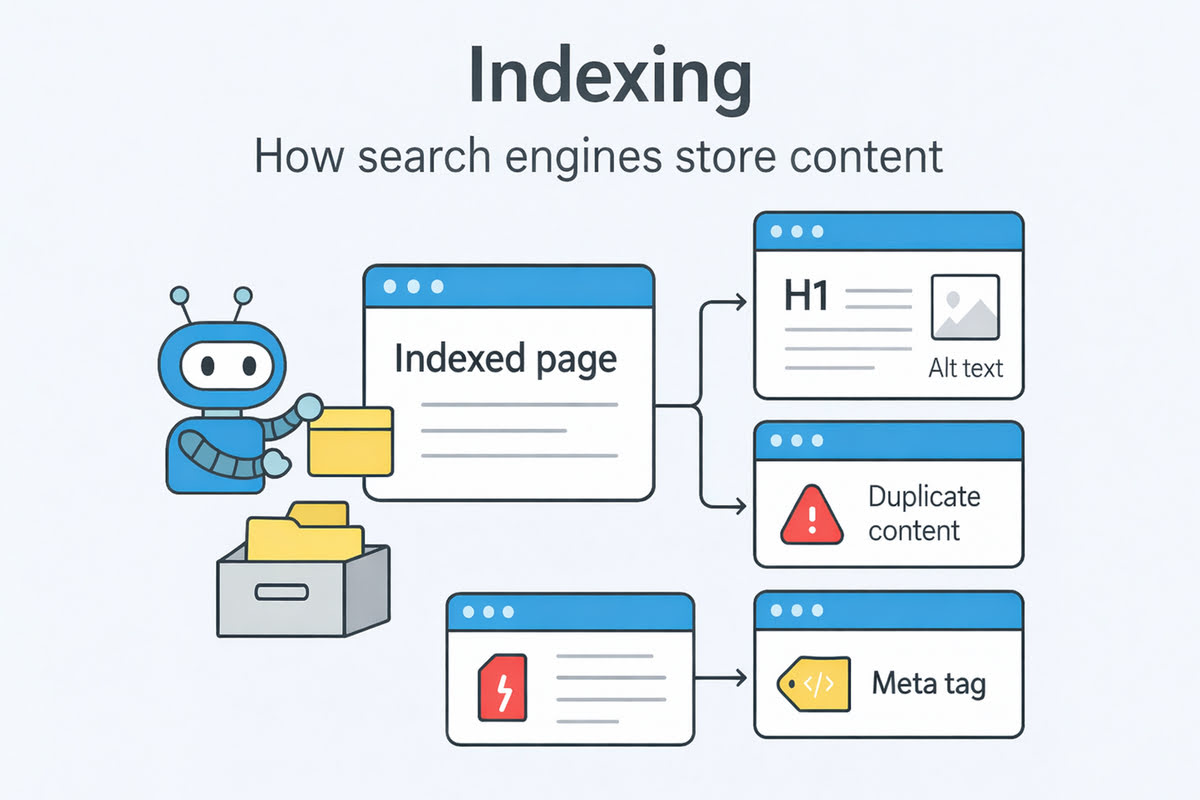
Indexing: The Gatekeeper of Search
This is where most SEO effort quietly breaks. A page can be:
- Found
- Read
- Understood
and still never make it into Google’s index. Why?
Because indexing is not automatic, it’s selective.
Here’s the harsh truth about indexing,
96.55% of web pages receive zero organic traffic, often due to indexing issues.
(Source: Proxibo)
Think of indexing like Google asking:
“Does this page add anything new or useful to what I already know?”
If the answer feels unclear, the page gets ignored.
Why Google Quietly Ignores Pages:
This usually happens when:
- Content is too similar to existing pages
- Internal authority is weak
- Canonical signals are confusing
- The page lacks context within the site
- Slow rendering (especially JavaScript-heavy pages)
Research has shown that JavaScript is a major bottleneck: 15–25% of content can be lost to indexing when rendering fails.
(Source: Ranktracker)
In simple terms, Google doesn’t see enough reason to keep it.
The Hidden Role of Internal Authority
One of the most overlooked factors is how a page is internally connected.
Pages that sit inside strong topic clusters:
- Get indexed faster
- Are understood more clearly
- Build stronger relevance signals
Because Google interprets internal links as signals of importance.
How Large Platforms Ensure Indexing at Scale
Think about how Netflix works.
It deals with massive volumes of dynamic content, yet its pages consistently get indexed because it:
- Uses structured, repeatable page templates
- Ensures content is server-rendered (not hidden behind JavaScript)
- Reinforces relationships between shows, genres, and categories
Netflix doesn’t rely on Google to “figure things out.” It makes understanding unavoidable and builds a search-engine-friendly website where understanding is built into its structure.
Ranking: Where Everything Becomes Competition
Once your page is indexed, you’ve earned a spot in Google’s database, but not visibility. Ranking is where Google decides:
Is this result strong enough to be shown before others?
And at this stage, technical SEO shifts from access to performance and clarity, and your site’s performance overall signals.
Mobile First Isn’t Optional Anymore
Google no longer treats mobile as a secondary version. It’s the primary version of your website.
Google now uses mobile-first indexing for nearly all websites.
More than 60% of web traffic now comes from mobile, and since Google uses mobile-first indexing, the quality of your mobile site can impact your entire site’s rankings.
(Source: araptus)
So, if your mobile site is:
- Slower
- Cluttered
- Missing content
You’re sending weaker ranking signals, whether you realize it or not.
What High-Performing Brands Get Right
Let’s understand how Apple works. Its rankings aren’t just driven by brand power, but they’re supported by technical precision:
- Lightning-fast load speeds
- Clean, minimal page structures
- Consistent mobile experience across pages
Nothing feels heavy or confusing, and that’s exactly why it performs. Strong technical SEO strategies ensure the experience is seamless for both users and search engines.
The Technical Signals That Actually Influence Rankings
At this stage, Google is evaluating how clearly your website communicates quality.
The data supports this, too; pages with technical errors rank 40-60% lower than technically optimized equivalents.
(Source: Ranktracker)
Key technical signals include:
- Page Speed & Core Web Vitals
- Mobile Usability
- HTTPS Security
- Structured Data
- Clean Architecture
When these align, Google confidently ranks your site. This is the outcome of continuous technical SEO fixes.

How Artxpro Turns Technical SEO Into Real Visibility
At Artxpro, we don’t treat SEO as a checklist; we build systems. As a leading provider of SEO services in Pakistan and a performance-driven digital marketing agency in Pakistan, our approach is structured into three layers:
Crawl Optimization
We identify where Google is wasting attention:
- Unnecessary URL variations
- Weak internal pathways
- Broken or inefficient structures
Then we restructure your site so that Google spends more time on pages that actually drive growth.
Indexing Control
Instead of hoping your pages get indexed, we make it predictable.
We:
- Strengthen internal authority signals
- Resolve duplication and canonical conflicts
- Improve content clarity at a structural level
So, your pages don’t just exist; they get selected.
Ranking Readiness
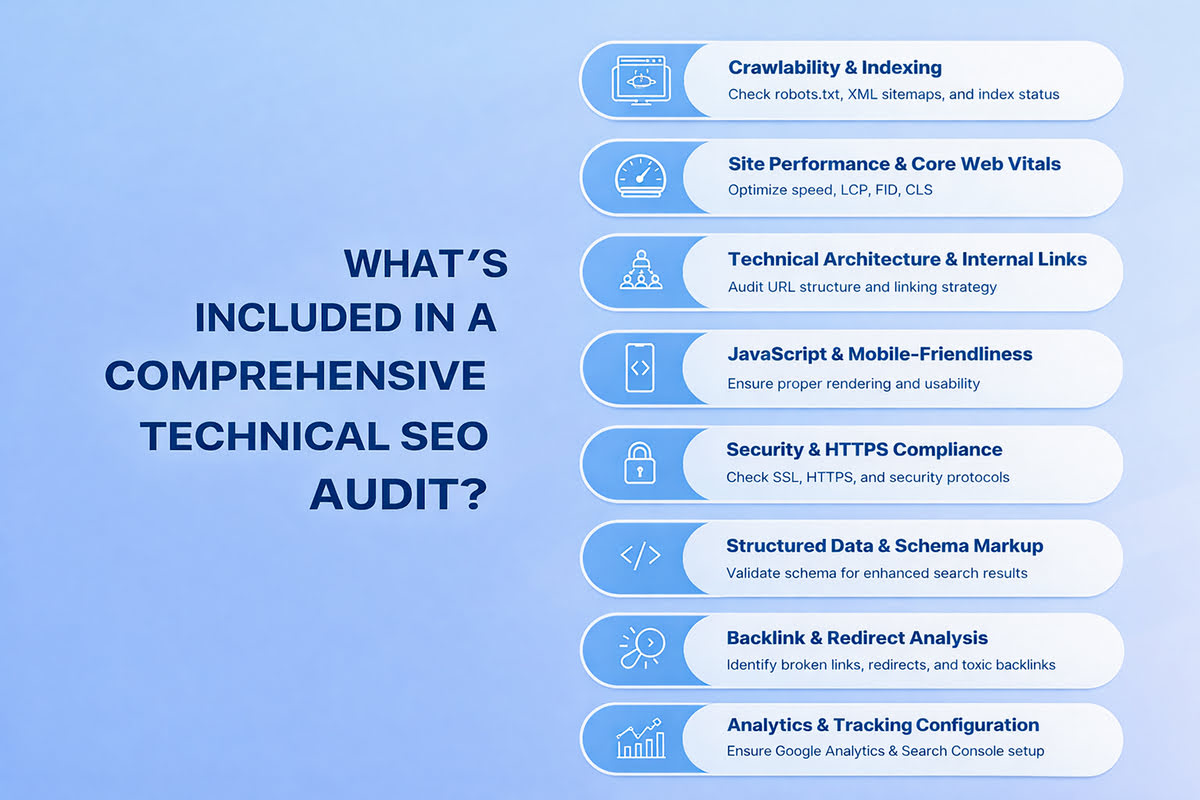
Once your pages are eligible, we optimize for signal clarity and performance:
- Speed and Core Web Vitals improvements
- Mobile-first experience alignment
- Structured data and hierarchy refinement
This ensures Google doesn’t just see your content, it understands exactly why it should rank it.
What This Looks Like in Practice
Most clients come to us with one assumption: “We need better rankings.”
But after a detailed technical SEO audit, the real issues are often:
- Important pages are not being crawled frequently
- High-value pages stuck in “not indexed”
- Technical inconsistencies weakening ranking signals
Once those are fixed, the shift is noticeable:
- Faster indexing of new content
- Increased visibility without publishing more pages
- Stronger, more stable rankings over time
This is why businesses investing in SEO services and working with a reliable digital marketing agency in Pakistan see long-term growth, not just short-term spikes.
Final Perspective
Zoom out, and this is what’s really happening:
- Crawling decides if Google reaches you
- Indexing decides if you’re worth keeping
- Ranking decides where you stand
And most websites don’t fail at ranking. They fail before they even get there.
So, if you don’t want this to happen with your website, get in touch with us today.
Digital Marketing Specialist
With a solid 12+ year background in digital marketing, Danyal delivers blogs packed with timely insights, useful tips, and impactful stories. His writing style is engaging, informative, and always rooted in real-world value for businesses and readers. From breaking down SEO strategies to exploring ecommerce trends and keeping tabs on what’s going viral online, he keeps it fresh, fun, and totally binge-worthy. If it’s worth knowing in the digital world, Danyal’s already writing about it.

An award-winning digital marketing agency dedicated to delivering effective solutions that ensure your success in the age of digital channels, screens, and trends.