


What Is LLMO? Optimize Content For AI & Large Language Models

What if your next customer never scrolls through Google results at all?
Instead, they ask ChatGPT, Gemini, or Perplexity which company to trust, which product to choose, or which service to use.
If your brand is missing from that answer, you could be losing visibility before the customer even reaches your website.
That’s where LLMO comes in. LLMO helps make your content easier for AI systems to understand, trust, retrieve, and reference, so your business has a stronger chance of being part of the conversation when buying decisions are being made.
What Is LLMO?
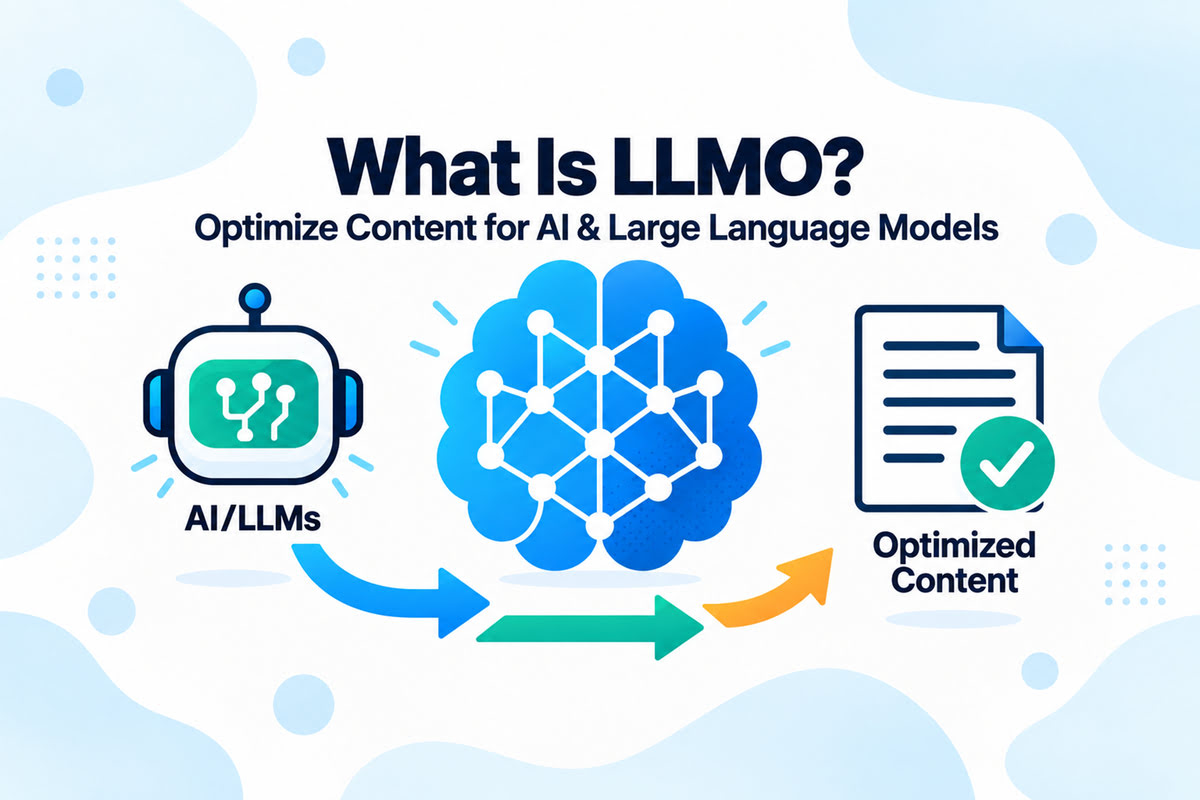
LLMO stands for Large Language Model Optimization. It helps make your content easier for large language models and other generative AI systems to understand, trust, retrieve, and reference in AI-generated responses. It works alongside SEO, not instead of it. For your business, the goal is simple: create clear, useful, credible content that improves visibility in both search engines and AI-driven platforms.
This guide is designed for business owners and marketers who want a practical understanding of how AI-powered discovery is changing search. The recommendations combine established SEO principles with current guidance from major search and AI platforms, published research, and Artxpro’s approach to evaluating content, technical accessibility, entity signals, and AI visibility.
Why LLMO Matters for Business Owners
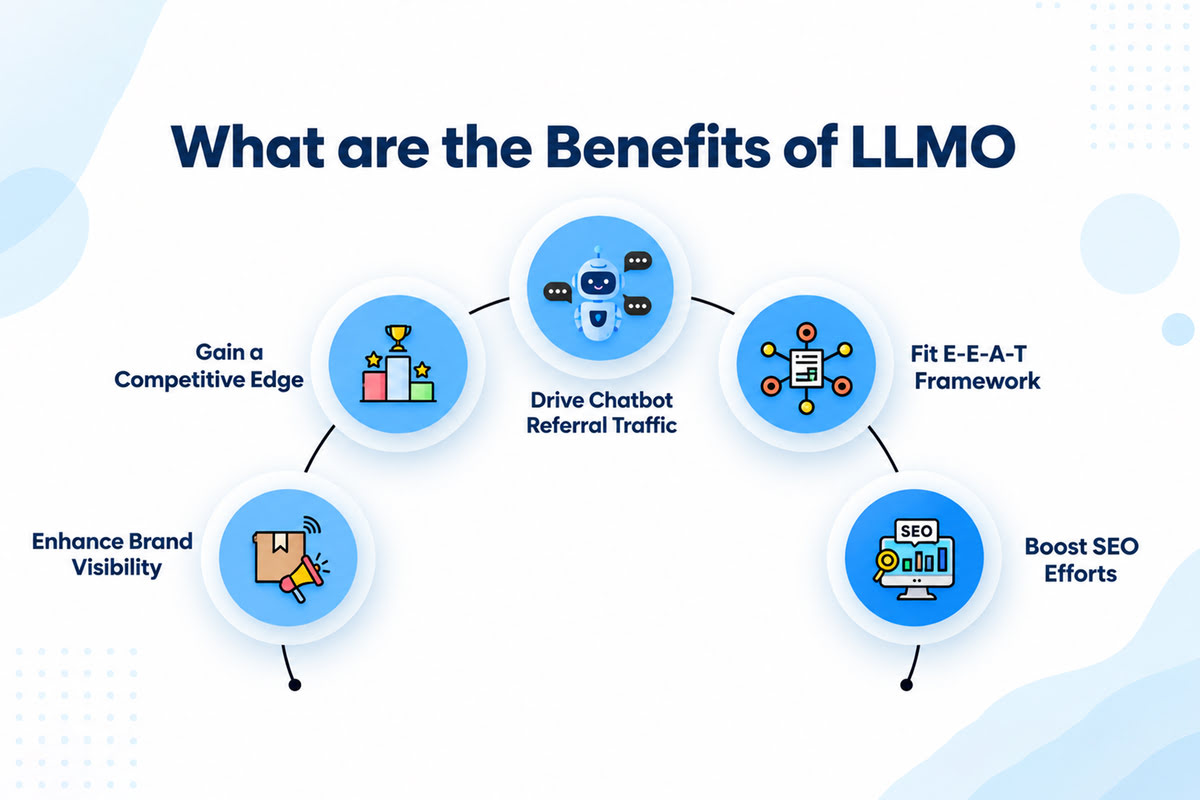
Traditional SEO helps you compete for rankings and clicks. LLMO expands that goal to AI-generated discovery, where AI recommendations, citations, brand mentions, and direct answers can influence purchasing decisions.
Imagine a customer asking an AI assistant, “What should I look for when hiring a commercial roofing company?” If your website provides a specific, credible answer, your business has a better chance of becoming part of that customer’s research journey.
That matters because customers can form an opinion about your business before they ever reach a conventional results page or visit your website.
A Pew Research Center study of 68,879 Google searches found that users clicked traditional search results on 8% of visits when an AI summary appeared, compared with 15% when no AI summary appeared. Links inside AI summaries received clicks in only about 1% of visits.
This can support brand awareness, trust, qualified visits, and eventually leads or sales. However, no legitimate LLMO strategy can guarantee an AI citation or recommendation. AI search visibility depends on the platform, query, relevance, indexing, and available sources.
How to Optimize Content for AI Answers
Here are six practical LLMO strategies to focus on if you want to optimize content for LLMs, improve search performance, and increase your chances of appearing in AI-generated answers.
1. Build Topical Authority
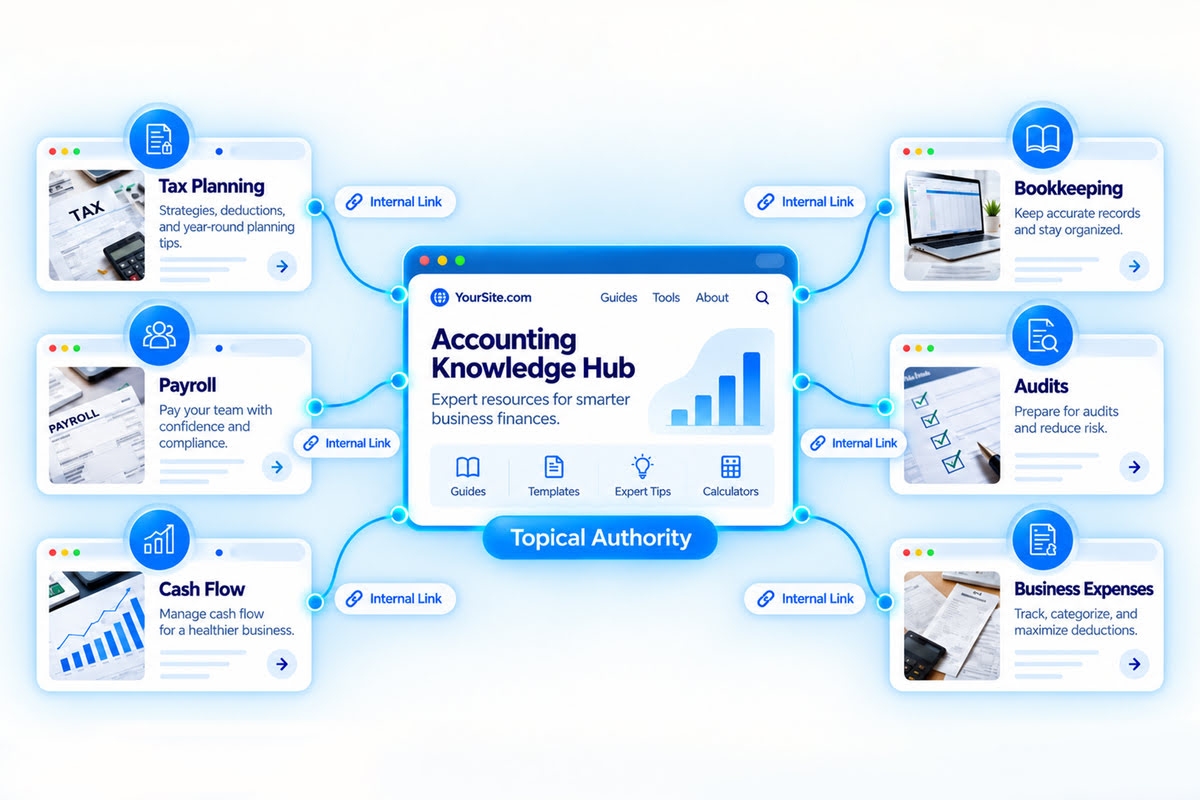
Don’t publish isolated articles just to target individual keywords. Build a complete library of useful content around the problems your customers care about.
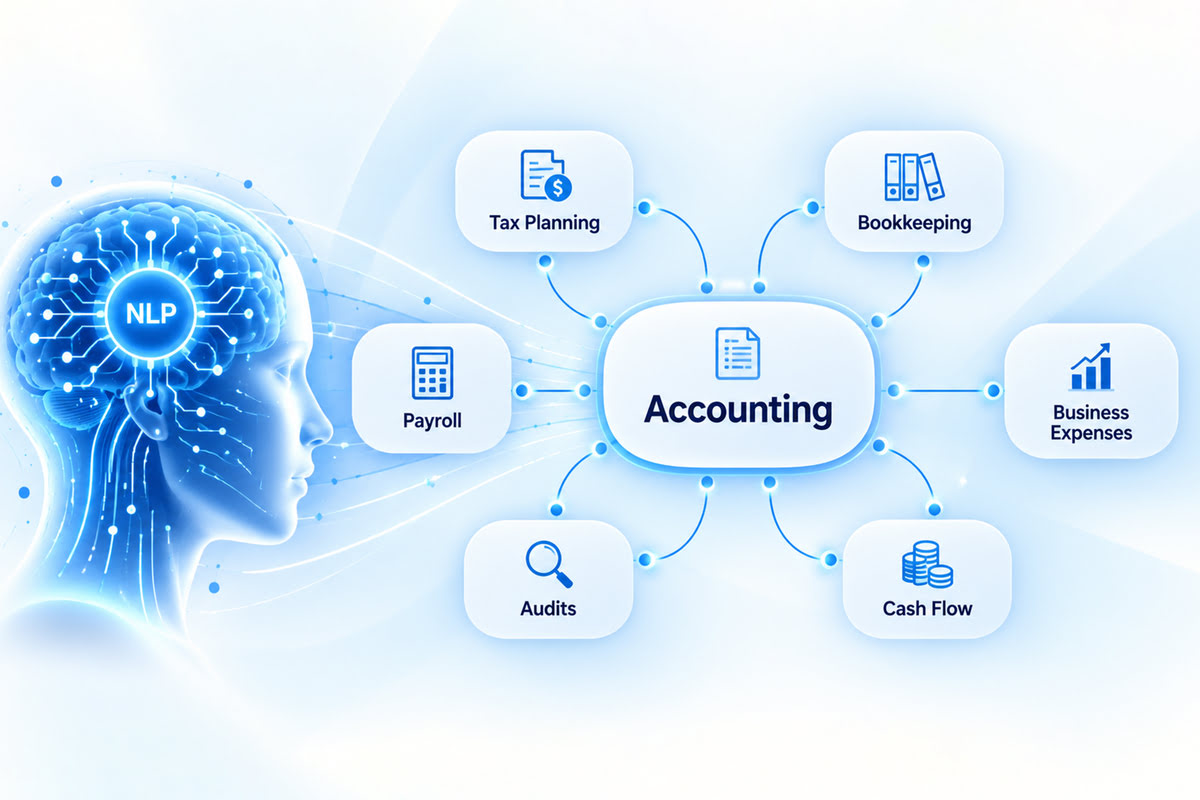
For example, if you run an accounting firm, you might cover tax planning, bookkeeping, payroll, business expenses, audits, and cash-flow management and connect those pages with relevant internal links.
Covering a topic in depth helps establish your website as a more complete resource.
2. Optimize for Semantic Relevance
Modern search and AI systems focus on meaning and relationships rather than on how often a keyword appears. This is where semantic SEO becomes especially important.
Write naturally about your main topic, related services, customer problems, locations, products, and relevant industry concepts. Define important terms clearly and support factual claims with specific details where appropriate.
Instead of keyword stuffing, ask yourself:
“Would a customer clearly understand what this page is about and how the information relates to their question?”
If the answer is yes, you are moving in the right direction.
To explore the signals that can influence how content performs across AI-powered and traditional search experiences, read AI Ranking Factors That Improve Search Visibility.
3. Create a Clear Website Structure
Your website should make it easy for both customers and search systems to understand how your content fits together.
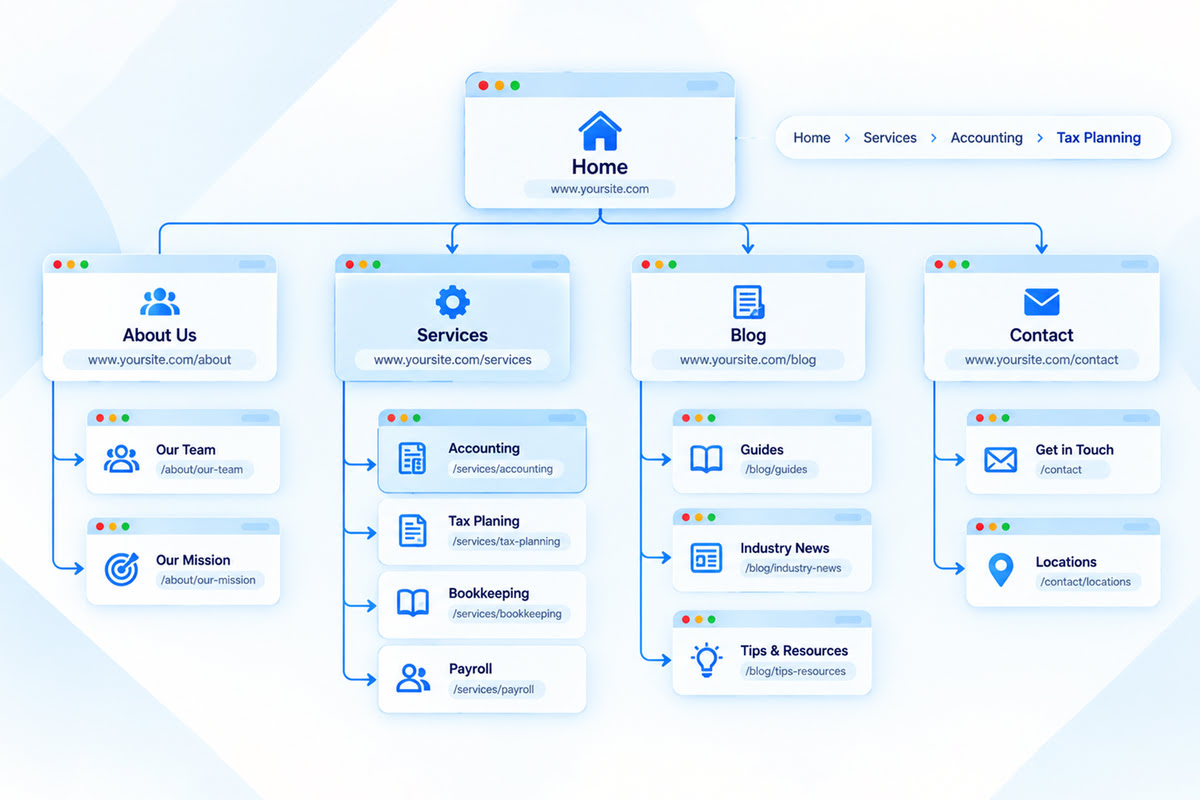
Organize related pages into logical categories, use descriptive URLs and headings, and connect relevant articles through internal links. Different search intents, such as definitions, comparisons, tutorials, and service information, should also have clearly focused pages.
Clear architecture can help traditional search crawlers and some AI crawlers discover, process, and interpret your website more effectively. Technical accessibility does not guarantee inclusion in AI answers, but inaccessible or poorly organized content can make discovery more difficult.
For a business owner, this also improves the customer journey. Visitors can move naturally from learning about a problem to evaluating your solution.
4. Demonstrate E-E-A-T
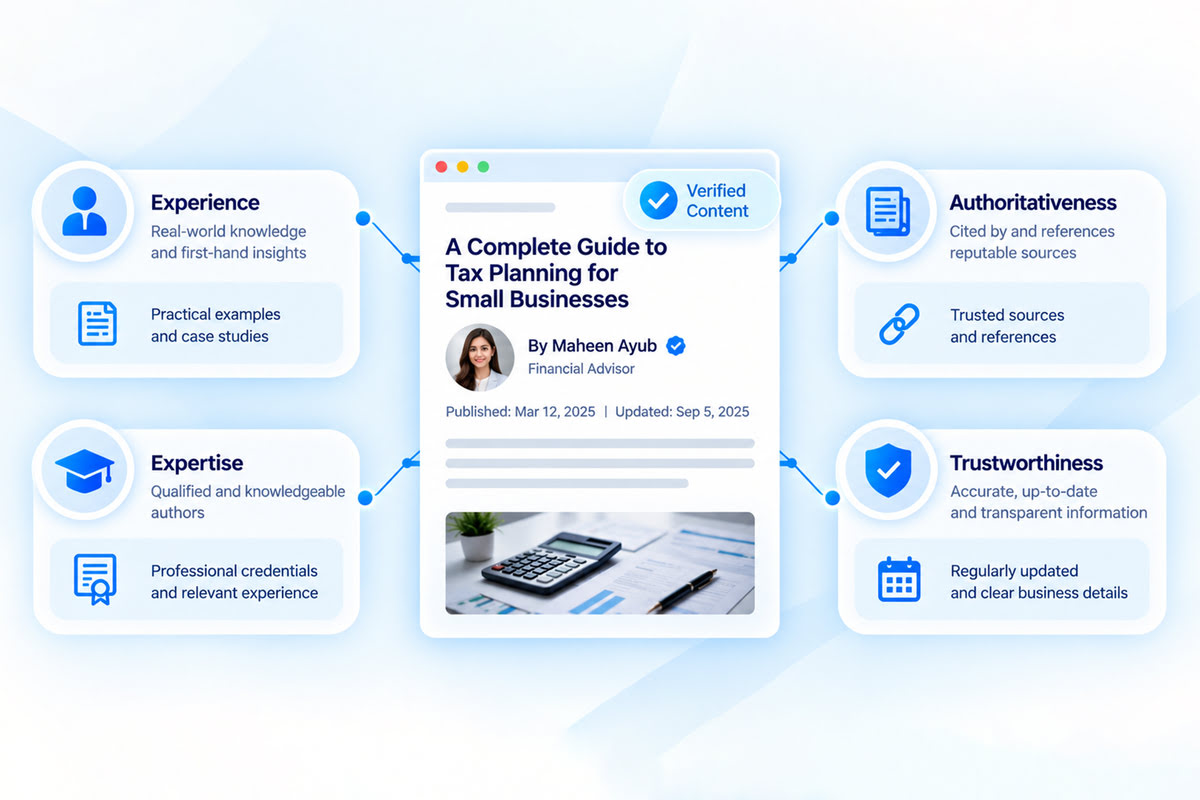
E-E-A-T stands for Experience, Expertise, Authoritativeness, and Trustworthiness.
Show visitors who created your content and why they are qualified to discuss the subject. Add genuine author information, cite reputable sources, keep important information updated, and make your business identity clear.
Useful trust signals can include:
- Real author profiles and relevant credentials
- First-hand examples or case studies
- Reputable third-party references
- Publication and update dates
- Accurate business and contact information
- Appropriate Person or Organization structured data
These elements make your expertise easier for users, search engines, and automated systems to verify. Stronger trust signals can also improve the quality and consistency of information available to generative AI systems.
5. Strengthen Your Brand as an Entity
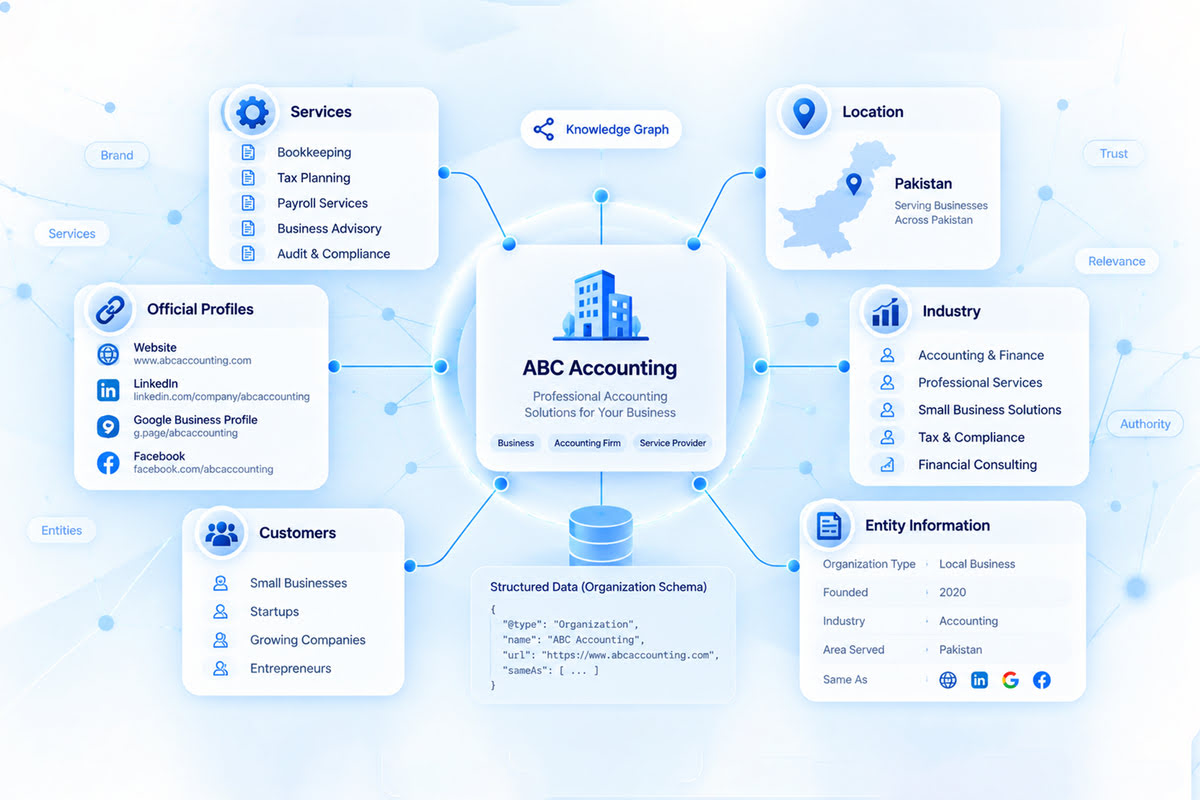
AI systems need clear context about who your business is, what it does, and where it fits within your industry. This is a core part of entity SEO and modern LLMO.
Use your official business name consistently and connect it with accurate information about your services, products, expertise, location, customers, or industry.
For example, instead of writing:
“We provide professional solutions for businesses.”
Be specific:
“ABC Accounting provides bookkeeping and tax planning services for small businesses in Pakistan.”
Clear, factual descriptions help establish stronger relationships between your brand and the topics you want to be known for. Organization schema and links to official brand profiles can also support stronger entity signals.
For a more detailed breakdown of the signals that may help increase brand mentions across AI platforms, read How to Get Your Brand Mentioned in AI Answers.
6. Write Direct, Answer-Focused Content
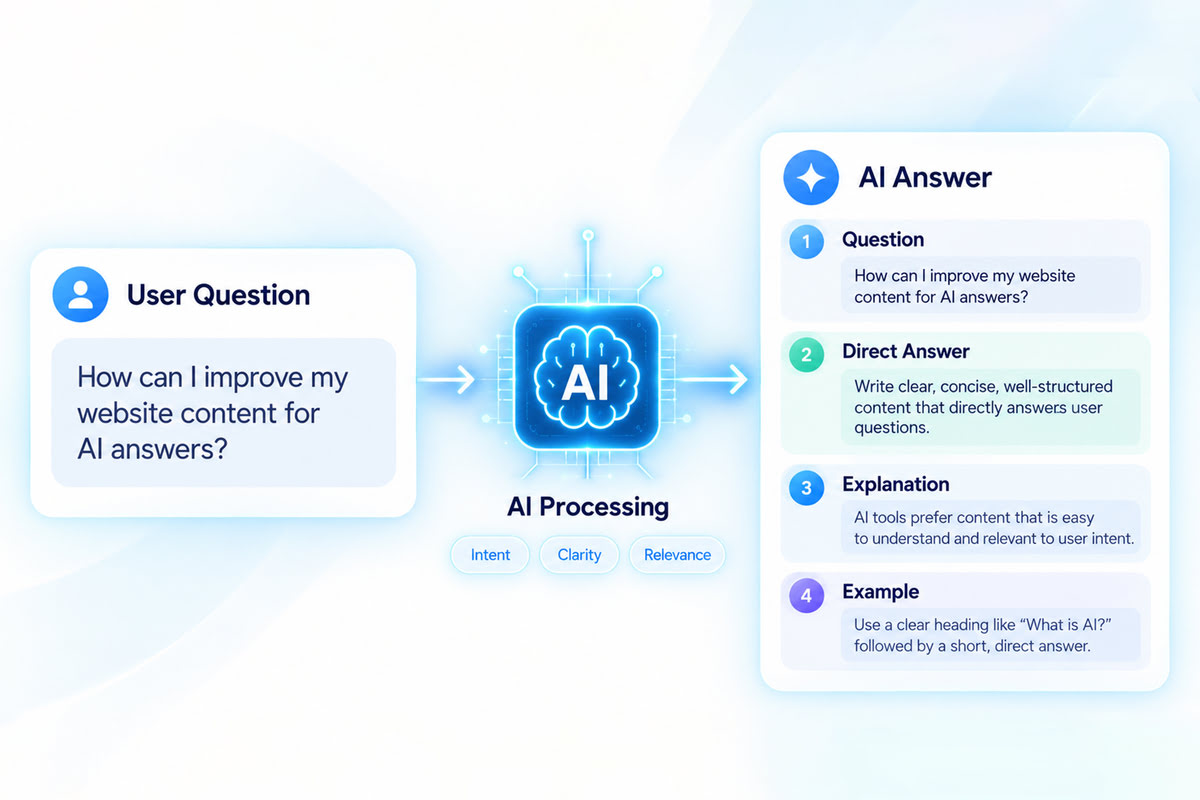
One of the simplest LLMO improvements is also one of the best improvements for your customers: answer their questions directly.
Use question-based headings when appropriate, put the main answer near the beginning of each section, and follow it with supporting context, examples, or evidence.
This is especially important as searches through AI search engines become more conversational. Google reported that early AI Mode users were asking queries two to three times longer than traditional searches, showing how AI search is encouraging more detailed and complex questions.
Keep paragraphs focused and use lists or tables when they make information easier to understand. A useful structure is question → definition → explanation → example, which helps readers find the main answer quickly while providing enough context for search and AI systems to understand the topic accurately.
How Artxpro Approaches LLMO Analysis
A useful LLMO strategy should be based on observable evidence rather than assumptions about how an individual AI model works. As an AI SEO agency in Pakistan, Artxpro’s approach focuses on testing commercially relevant questions, reviewing which brands and sources appear in AI-generated answers, analyzing cited URLs, checking brand accuracy, and comparing those findings with the website’s existing content, authority signals, technical structure, and search visibility.
An LLMO review can also examine whether important business information is consistent across the website, author profiles, structured data, service pages, and relevant third-party sources. The goal is to identify practical gaps that can be improved through clearer content, stronger evidence, better site structure, and more authoritative brand information.
For companies targeting local or national customers, this type of analysis can also form part of broader GEO services in Pakistan, where SEO, LLMO, digital PR, structured data, and AI visibility measurement work together to improve discovery across search and generative platforms.
Because AI-generated answers can vary by platform, prompt, location, available sources, and time, these tests should be treated as visibility observations rather than guaranteed ranking signals.
Which LLM Platforms and Chatbots Should You Optimize For?
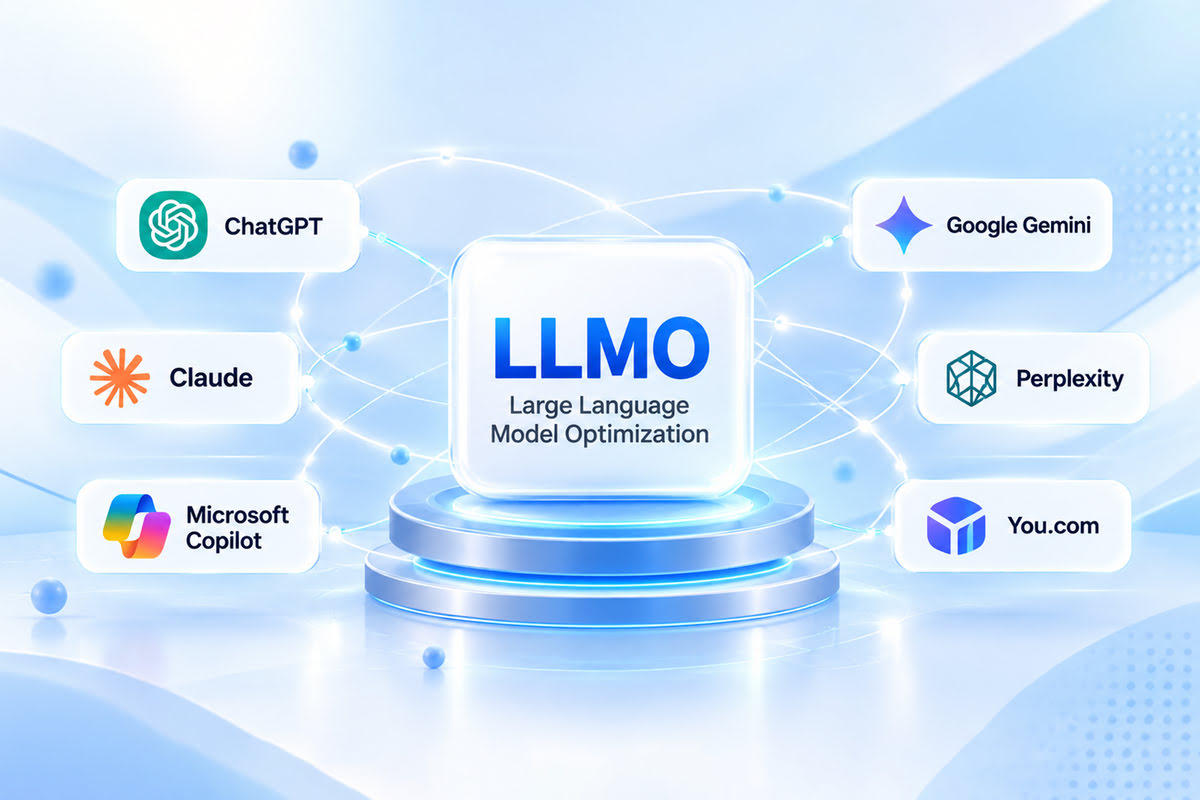
Businesses should focus on major AI platforms where customers increasingly discover information, brands, products, and services.
- ChatGPT
- Google Gemini
- Claude
- Perplexity
- Microsoft Copilot
- You.com
- Grok
- DeepSeek
The scale of these platforms shows why AI visibility matters. ChatGPT now has more than 1 billion weekly active users, while Google Gemini has surpassed 1 billion monthly users. Google’s AI Mode has also exceeded 1 billion monthly users, highlighting how quickly AI-assisted search and discovery are becoming part of everyday online behavior.
For business owners, there’s no need to create a separate strategy for every platform. Focus on accurate information, first-hand expertise, clear answers, strong brand signals, and technically accessible content to strengthen your visibility across AI-powered search experiences.
How to Measure the Success of LLMO
LLMO success is measured by your brand’s visibility, accuracy, citations, and traffic across AI-generated answers.
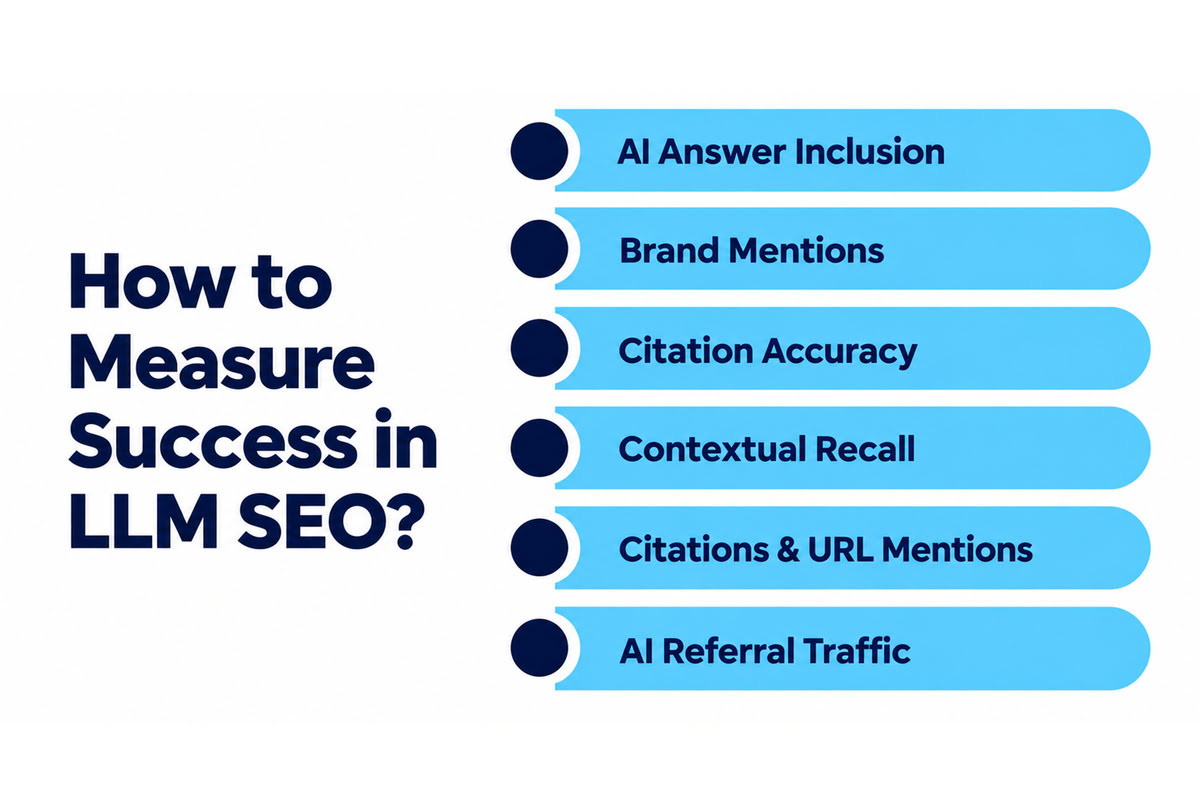
Track these key metrics:
- AI Answer Inclusion: Test prompts to see how often your content is cited, mentioned, or paraphrased.
- Brand Mentions: Measure how consistently AI platforms recognize and mention your brand.
- Citation Accuracy: Check whether AI systems reproduce your facts and claims correctly.
- Contextual Recall: Test related and reformulated prompts to measure consistency across queries.
- Citations & URL Mentions: Monitor source links and citations across ChatGPT, Gemini, Perplexity, Copilot, and other AI platforms.
- AI Referral Traffic: Use analytics, Google Search Console, and Bing Webmaster Tools to track AI referrals, branded impressions, clicks, leads, and conversions.
For businesses, the strongest LLMO results combine AI visibility for businesses with accurate brand representation, qualified traffic, leads, and conversions.
What Software Exists for LLM Optimization?
LLM optimization software helps businesses track AI visibility, identify data and citation sources, monitor brand mentions, and understand which documents influence AI-generated answers.
Key LLMO tools include:
- Search Atlas QUEST: Tests high-volume prompts, extracts AI citations, matches cited URLs to source documents, and identifies associated editors, publishers, or authors. It also supports outreach through scraping, contact extraction, and email automation, while analyzing ingestion pathways such as Bing SERPs, Common Crawl, and custom crawlers.
- Diffbot: Builds and analyzes large-scale knowledge graphs for entity and data relationships.
- OpenPage.ai: Tracks source overlap and AI visibility across multiple LLM platforms.
- Market Brew: Uses search engine simulation and modeling to analyze ranking and visibility signals.
These tools support different parts of LLMO, including prompt monitoring, citation tracking, source discovery, entity analysis, knowledge graphs, visibility measurement, and targeted source outreach.
SEO vs. AEO vs. GEO vs. LLMO: What’s the Difference?
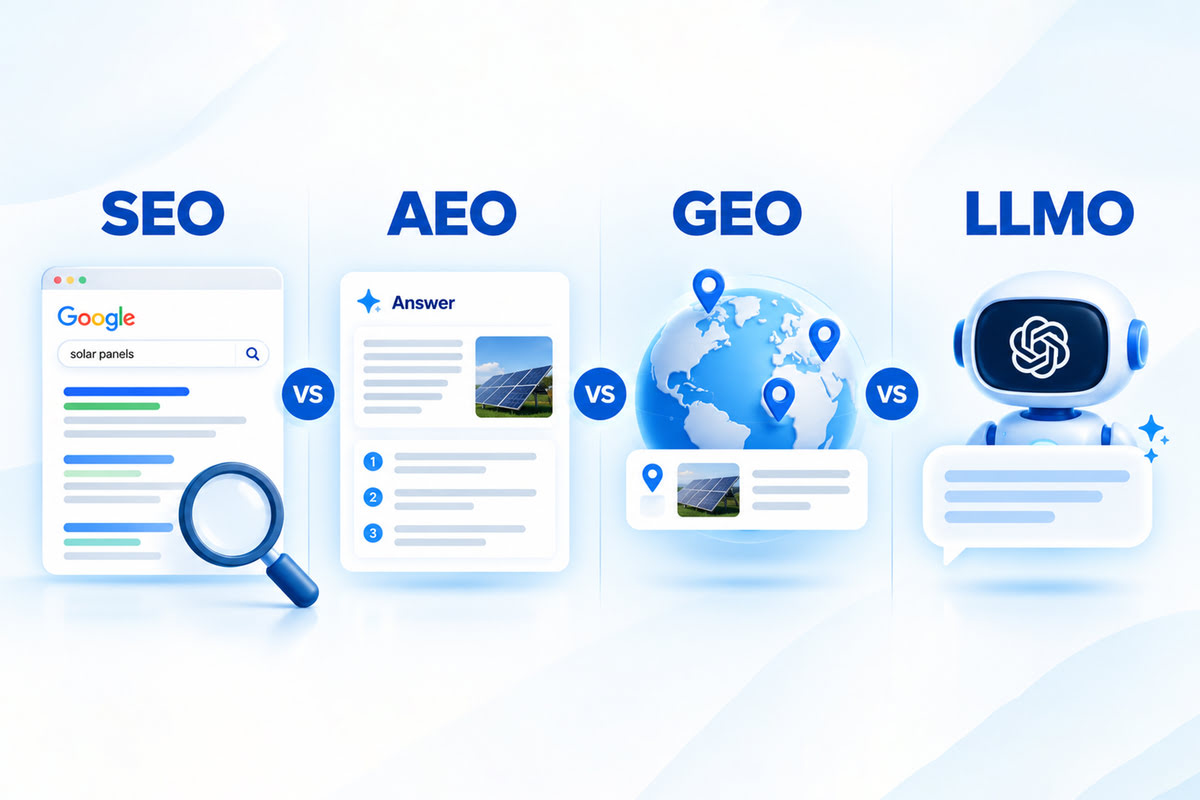
SEO, AEO, GEO, and LLMO all aim to improve your brand’s discoverability, but they focus on different ways people find information online.
|
Aspect |
SEO |
AEO |
GEO | LLMO |
|---|---|---|---|---|
| Full Form | Search Engine Optimization | Answer Engine Optimization | Generative Engine Optimization | Large Language Model Optimization |
| Main Goal | Rank higher in search results | Appear in direct answers | Gain visibility in AI-generated search results | Get mentioned, retrieved, or cited by LLMs |
| Primary Focus | Keywords, relevance, backlinks, technical SEO | Clear question-answer content | Authoritative, citation-worthy content | Semantic clarity, entity signals, trust, and context |
| Target Platforms | Google, Bing | Featured snippets, voice assistants, answer engines | Google AI Overviews, Perplexity, AI search | ChatGPT, Gemini, Claude, Copilot, Grok |
| Query Style | Keywords and search phrases | Direct questions | Conversational and research-based queries | Complex, multi-turn, conversational prompts |
| Authority Signals | Backlinks and domain authority | Clear expertise and structured answers | Trusted sources and citations | Brand mentions, entity consistency, E-E-A-T |
| Key Metrics | Rankings, clicks, organic traffic | Answer visibility, CTR | AI citations, mentions, referral traffic | Brand mentions, citations, accuracy, AI referral traffic |
| Best Approach | Build strong search visibility | Give direct answers | Make content citation-worthy | Make your brand and content easy for AI to understand and trust |
The LLMO Audit Framework (ACE)
Use this simple framework quarterly to review your AI visibility.
A – Assess Visibility
- Check whether your brand appears across relevant AI-generated answers.
- Track citations, brand mentions, source URLs, and competitor visibility.
C – Consolidate Content
- Merge overlapping or near-duplicate pages where appropriate.
- Use clear canonical URLs and keep brand, product, and service naming consistent.
E – Enrich Content
- Add relevant structured data such as Article, Product, or other schema types that accurately match the page.
- Strengthen author details, citations, internal links, factual accuracy, and content freshness.
Run the audit regularly, prioritize weak areas, and measure changes in AI mentions, citations, referral traffic, leads, and conversions.
How Artxpro Can Help With LLMO
Artxpro, a trusted AI digital marketing agency in Pakistan, helps businesses strengthen their visibility across search engines and AI-powered discovery platforms through a combination of content strategy, technical SEO, entity optimization, digital PR, and AI visibility measurement.
Rather than promising guaranteed citations or recommendations, the focus is on improving the signals that make a business easier to understand, verify, and reference.
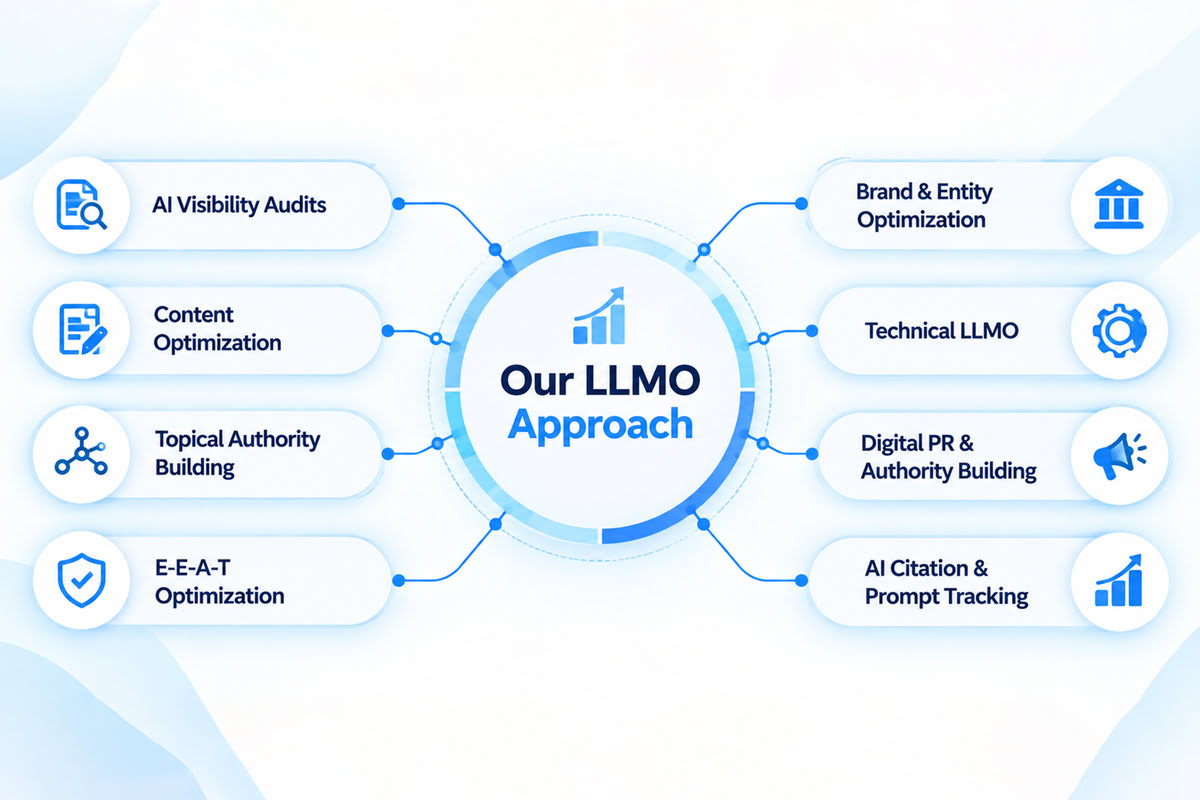
Our LLMO approach can include:
- AI Visibility Audits: Identify where your brand appears across major AI platforms and where competitors are gaining visibility.
- Content Optimization: Improve semantic relevance, answer structure, topical depth, and content clarity.
- Topical Authority Building: Develop content clusters and internal linking around high-value customer topics.
- E-E-A-T Optimization: Strengthen authorship, trusted references, case studies, and credibility signals.
- Brand & Entity Optimization: Make your services, expertise, locations, and brand information clear and consistent across the web.
- Technical LLMO: Improve crawlability, indexing, schema markup, canonicalization, and site structure.
- Digital PR & Authority Building: Earn relevant brand mentions and coverage from trusted third-party sources.
- AI Citation & Prompt Tracking: Monitor brand mentions, citations, source URLs, competitor visibility, and AI referral traffic.
For businesses, success should not be measured simply by appearing in more AI answers. The stronger goal is to improve accurate brand visibility and turn that visibility into qualified traffic, enquiries, leads, and measurable business results.
Ready to Improve Your Brand’s AI Visibility?
If your customers are using ChatGPT, Gemini, Perplexity, and other AI platforms to research products and services, your brand should be part of those conversations.
Partner with Artxpro to build a practical LLMO strategy that strengthens your AI visibility, authority, and lead-generation potential. Contact us today to get started.
Common Questions About LLMO
What does LLMO stand for?
LLMO stands for Large Language Model Optimization. It focuses on making content easier for AI systems to understand, retrieve, and reference.
Is LLMO replacing SEO?
No. LLMO works alongside SEO by extending visibility from traditional search results into AI-generated answers.
Why does LLMO matter for businesses?
It can help businesses improve AI visibility, brand awareness, authority, referral traffic, and lead opportunities.
Which platforms should businesses optimize for?
Key platforms include ChatGPT, Gemini, Claude, Perplexity, Microsoft Copilot, Grok, DeepSeek, and You.com.
Can LLMO guarantee AI citations?
No. No legitimate strategy can guarantee citations or recommendations because AI outputs vary by platform, query, sources, and context.
Do I need a separate website for LLMO?
No. LLMO can usually be applied to your existing website by improving content, structure, technical accessibility, and brand signals.
Can AI-generated content be used for LLMO?
Yes, but it should be reviewed by knowledgeable humans for accuracy, originality, usefulness, and brand-specific expertise before publishing.
How often should LLMO content be updated?
Update content whenever facts, services, products, regulations, statistics, or customer needs change rather than following an arbitrary publishing schedule.
Sources & Further Reading
- Pew Research Center – User research on click behavior when Google AI summaries appear in search results.
- Google Search Central – Creating Helpful, Reliable, People-First Content.
- Google Search Central – Guidance for optimizing content for generative AI features in Google Search.
- Google – Official AI Mode usage and search-behavior announcements.
- Google – Official Gemini usage announcements.
- OpenAI – Official ChatGPT usage and product announcements.
Digital Marketing Specialist
With a solid 12+ year background in digital marketing, Danyal delivers blogs packed with timely insights, useful tips, and impactful stories. His writing style is engaging, informative, and always rooted in real-world value for businesses and readers. From breaking down SEO strategies to exploring ecommerce trends and keeping tabs on what’s going viral online, he keeps it fresh, fun, and totally binge-worthy. If it’s worth knowing in the digital world, Danyal’s already writing about it.

An award-winning digital marketing agency dedicated to delivering effective solutions that ensure your success in the age of digital channels, screens, and trends.