


What Is Search Everywhere Optimization and Why Do Brands Need It Now

Imagine this. You need a digital marketing agency. Do you open Google first? Maybe. But there's a good chance you'll also ask ChatGPT for recommendations, watch a YouTube review, browse LinkedIn, or even ask Siri while driving.
Without realizing it, you've searched across four different platforms before making a decision.
That's exactly how search works today, and it's why brands need to think beyond Google.
What Is Search Everywhere Optimization?
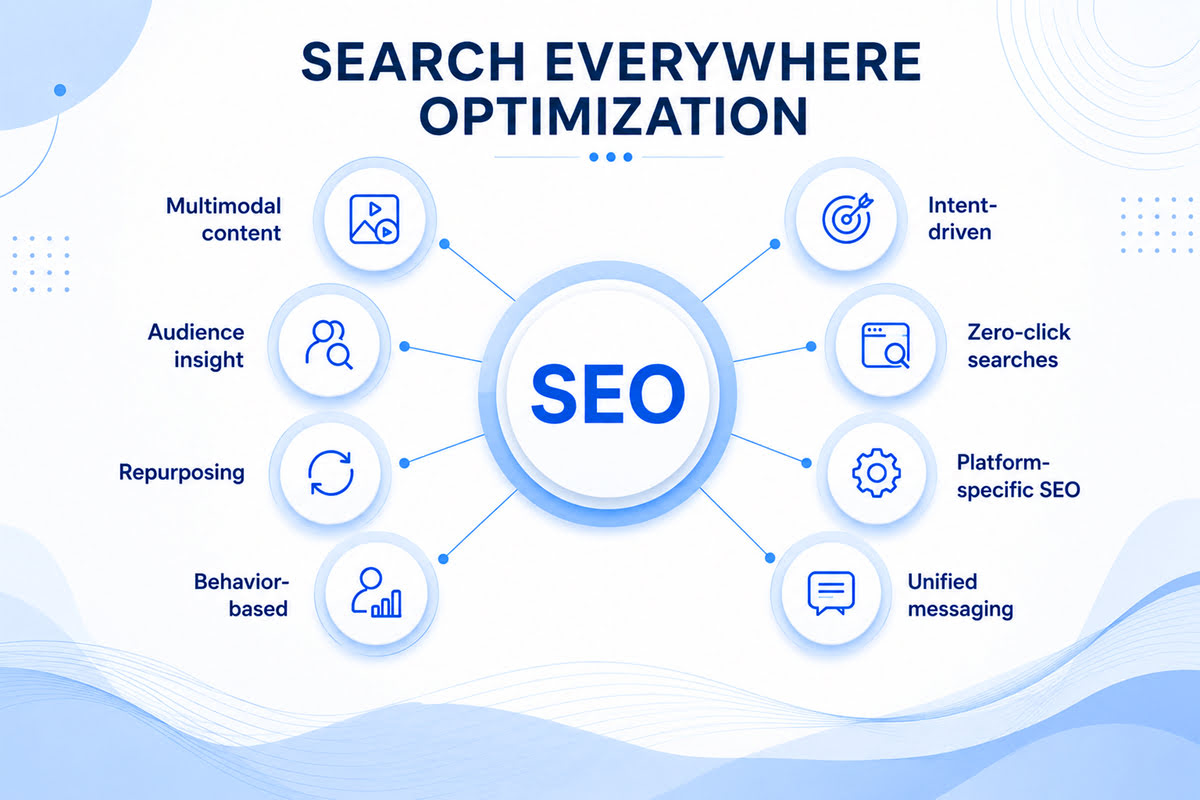
Search Everywhere Optimization is the practice of improving a brand's discoverability, credibility, and consistency across the platforms its audience uses to search, research, and make decisions.
Depending on the audience and industry, those platforms may include:
- Google Search
- AI search engines
- ChatGPT
- Gemini
- Perplexity
- Claude
- YouTube
- Social search on Instagram and TikTok
Traditional SEO remains an important part of this strategy. However, Search Everywhere Optimization takes a broader view of discovery.
Instead of asking only:
“How do we rank this page?”
brands also need to consider:
“Where does our audience search, and what evidence of our expertise will they find there?”
The objective isn't to appear on every platform. It is to establish a credible presence on the platforms that genuinely influence your customers.
Instead of optimizing for one search engine, you're optimizing for an entire digital ecosystem because the goal is AI discovery, stronger AI search visibility, and earning AI citations wherever users ask questions.
Why Search Everywhere Optimization Matters More Than Ever
Think about your most recent search online. Chances are, you checked more than one platform before deciding.
You probably:
- Google products
- Watch YouTube reviews
- Ask ChatGPT for recommendations
- Browse LinkedIn before hiring a company
- Check Reddit for honest opinions
- Use voice assistants while driving
- Discover brands through Instagram search
Consumers now move naturally between platforms; Your brand should too.
Google reports that more than 1 billion people now use AI Overviews, while the feature has expanded to support increasingly complex searches.
(Source: Google)
AI-powered search experiences are rapidly changing how people discover information. Instead of sending users to multiple websites, AI tools summarize information into direct answers, meaning brands that aren't recognized as trustworthy sources may never even enter the conversation.

Traditional SEO vs. AI SEO vs. Search Everywhere Optimization
Most businesses consider these terms to be the same, but actually they aren’t.
For a deeper breakdown, see the comparison table below:
|
Traditional SEO |
AI SEO |
Search Everywhere Optimization |
|---|---|---|
| Focuses on Google rankings | Focuses on appearing in AI-generated responses. | Focuses on visibility across every search platform. |
| Targets keywords | Targets AI understanding | Targets complete digital discoverability |
| Optimizes web pages | Optimizes AI search optimization strategies | Optimizes websites, content, social media, videos, PR, citations, and communities |
| Measures rankings | Measures AI mentions. | Measures overall brand visibility |
SEO still plays a critical role, but SEO for AI search engines is becoming equally important.
But together, they're only part of a much bigger picture. Search Everywhere Optimization combines both into one unified strategy.
Why Google Rankings Alone Are No Longer Enough
Imagine your website sits on the top of the first page. Sounds great, right?
Now imagine someone asks ChatGPT: "Who provides the best AI-powered SEO services in Pakistan?"
If your website ranks first on Google but AI doesn't recognize your expertise, you may never appear in that answer.
Modern AI systems don't simply copy Google's rankings.
They evaluate:
- Brand credibility
- Topical authority
- Structured content
- Consistency across platforms
- Trusted mentions
- High-quality citations
- Semantic relationships between topics
That's why businesses now invest in LLM optimization, helping large language models understand, trust, and recommend their content.
At ArtxPro, we've already begun helping businesses prepare for this shift through GEO services in Pakistan, AI-first content strategies, and advanced search optimization techniques.
If you've already read our guide on What Is Generative Engine Optimization (GEO)? You'll know that AI isn't replacing search; it's changing how search works. Search Everywhere Optimization builds on GEO by extending your visibility beyond AI search into every digital touchpoint where customers discover brands.
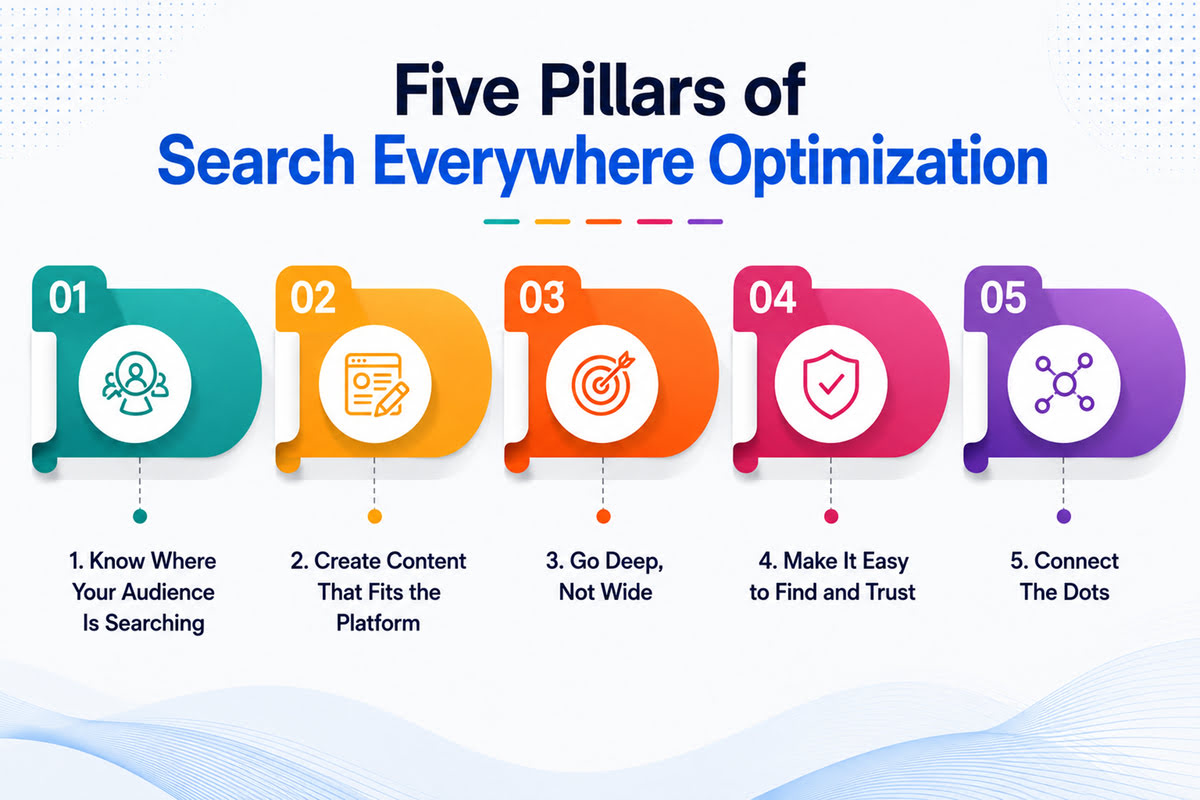
The Five Pillars of Search Everywhere Optimization
These five pillars provide the foundation for building a strategy that keeps you visible across every search touchpoint.
1. Know Where Your Audience Is Searching
Before you optimize your content, ask yourself one simple question: Where are your customers actually looking for answers?
Some start with Google, others ask ChatGPT, watch YouTube videos, browse LinkedIn, or even use voice assistants. The more you understand their search habits, the easier it becomes to show up where it matters most.
2. Create Content That Fits the Platform
Not every platform speaks the same language, and neither should your content. A detailed blog might work well on Google, while a quick video grabs attention on YouTube or Instagram. The key is to adapt your message to the platform without changing your brand's voice.
3. Go Deep, Not Wide
Publishing a blog on a single topic isn't enough anymore. If you want search engines and AI to trust your expertise, explore the topic from every angle. Answer related questions, create supporting content, and connect everything. That's how you build topical authority, and that's what AI loves to recommend.Top of Form
4. Make It Easy to Find and Trust
Great content isn't just informative; it's easy to understand. Use clear headings, answer real questions, back up your points with credible sources, and keep your content updated. When your content is helpful and trustworthy, both people and AI are more likely to choose it.
5. Connect The Dots
Think of your content as a conversation, not a collection of separate pages. When your blogs, service pages, case studies, and guides link to one another naturally, visitors can keep exploring, and AI gains a clearer understanding of your expertise. The more connected your content is, the stronger your overall search presence becomes.
How to Optimize for Search Everywhere
Many people ask, “How do I optimize my website?” The answer is simple: start with these practical steps;
1. Build Topic Clusters Instead of Isolated Blogs
Create related content around one core subject. For example, if your main topic is AI search, support it with blogs on GEO, AI ranking factors, semantic SEO, and AI citations.
2. Strengthen Your Internal Linking
Connect related pages across your website using relevant, descriptive anchor text. Strong internal linking helps search engines and AI systems understand how your content is connected and which pages are most important.
For example, if you’re writing about AI search visibility, you can guide readers to a more detailed resource on how to get your brand mentioned in AI answers? This creates a clear connection between related topics while helping users explore the subject in more depth.
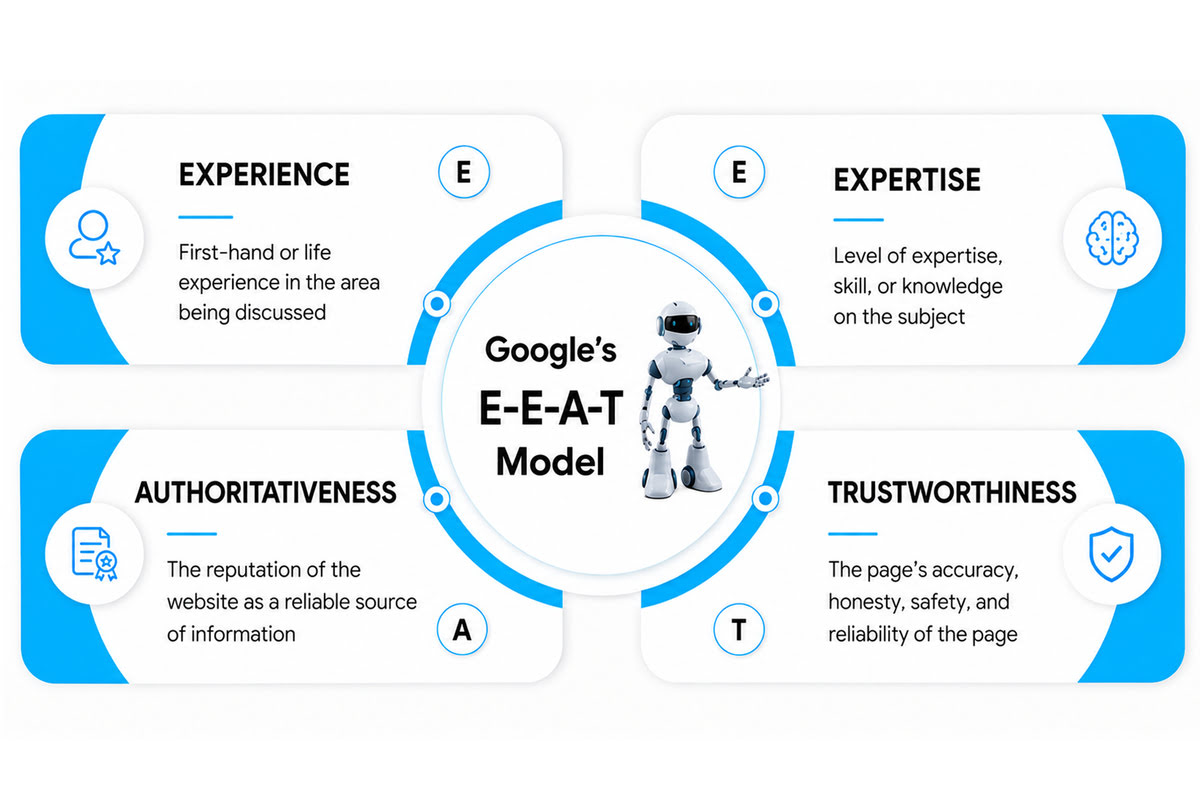
3. Demonstrate E-E-A-T
Google and AI systems reward content that reflects E-E-A-T.
Share real examples, client success stories, industry knowledge, and practical insights rather than publishing generic advice.
4. Improve Technical SEO
Search Everywhere Optimization still relies on a strong technical foundation. Make sure your website:
- Loads quickly
- Is mobile-friendly
- Uses structured data where appropriate
- Has clear site architecture
- Includes descriptive titles and meta descriptions
Build Your Brand Beyond Your Website
Publish consistently on LinkedIn, YouTube, and other relevant platforms. Earn mentions from reputable websites, participate in industry discussions, and encourage satisfied clients to leave reviews.
HubSpot reported a 1,850% increase in qualified leads after restructuring its content strategy around AI search visibility, conversational content, and authority rather than keyword rankings alone.
(Source: TechRadar)
The stronger your digital footprint, the easier it becomes for AI systems to recognize your brand as a trusted source.
What Does It Take to Rank in AI Search?
“How do I rank in AI search results?” This is one of the most common questions we hear.
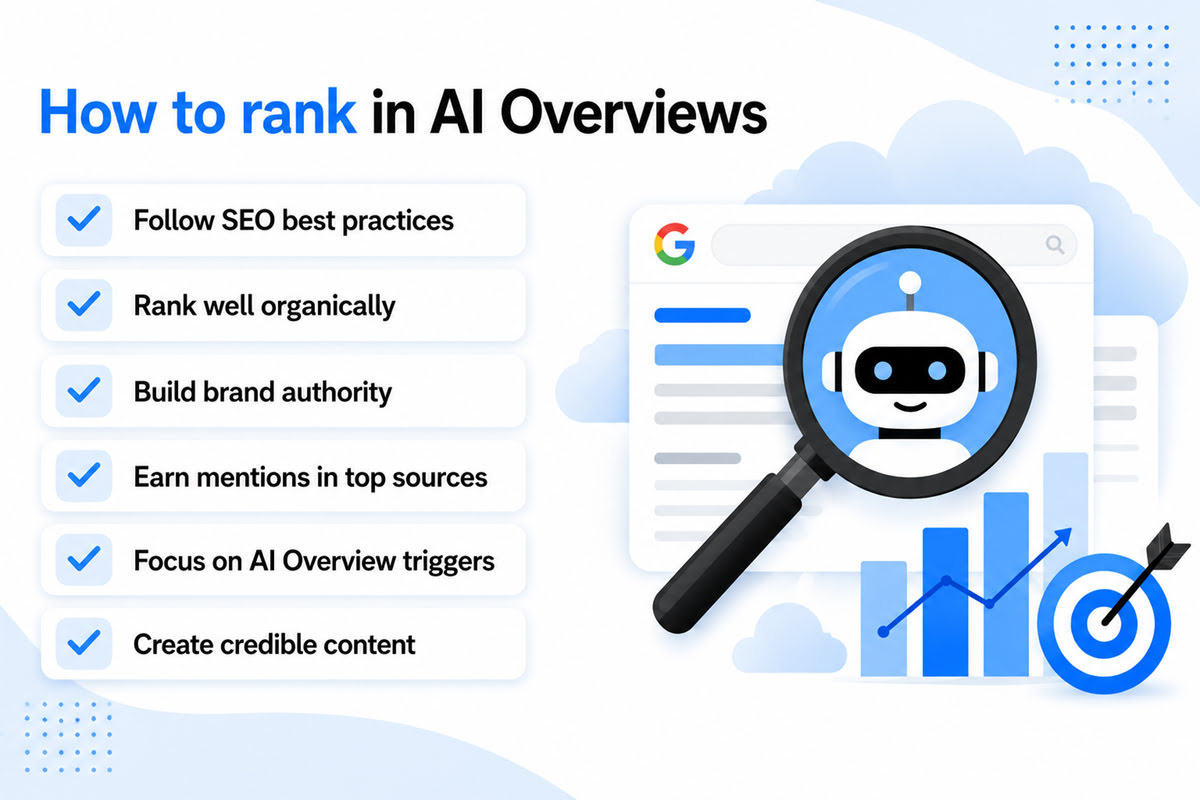
The reality is that there isn’t a single ranking factor. Instead, AI systems consider a combination of signals that influence whether your content is understood, trusted, and surfaced in AI-generated answers. If you want to understand these signals in more detail, explore our guide on AI ranking factors you need to know to improve search visibility.
These signals include:
- High-quality, original content
- Strong topical authority
- Consistent brand mentions across trusted platforms
- Relevant AI citations
- Clear website structure
- Helpful answers to user questions
- Positive brand reputation
- Semantic relevance across your content
AI search isn't about finding shortcuts; it's about earning visibility by consistently providing trustworthy, relevant, and valuable content.
Common Mistakes Businesses Make
Many businesses are still treating AI search as an afterthought. Here are some of the biggest mistakes we see:
- Publishing keyword-stuffed content with little real value.
- Focusing only on Google while ignoring AI platforms and social search.
- Writing isolated blog posts instead of building topical authority.
- Neglecting internal linking between related articles.
- Ignoring FAQs and conversational queries.
- Expecting instant AI visibility without investing in long-term authority.
Search Everywhere Optimization is a long-term strategy, not a one-time checklist.
Why Businesses in Pakistan Should Start Now
AI-powered search is growing rapidly, but many businesses in Pakistan are still focused solely on traditional SEO. That presents a valuable opportunity.
Brands that invest early in AI-powered SEO services in Pakistan, build topical authority, and create AI-friendly content today are far more likely to become trusted sources tomorrow.
The Future of Search Is Everywhere
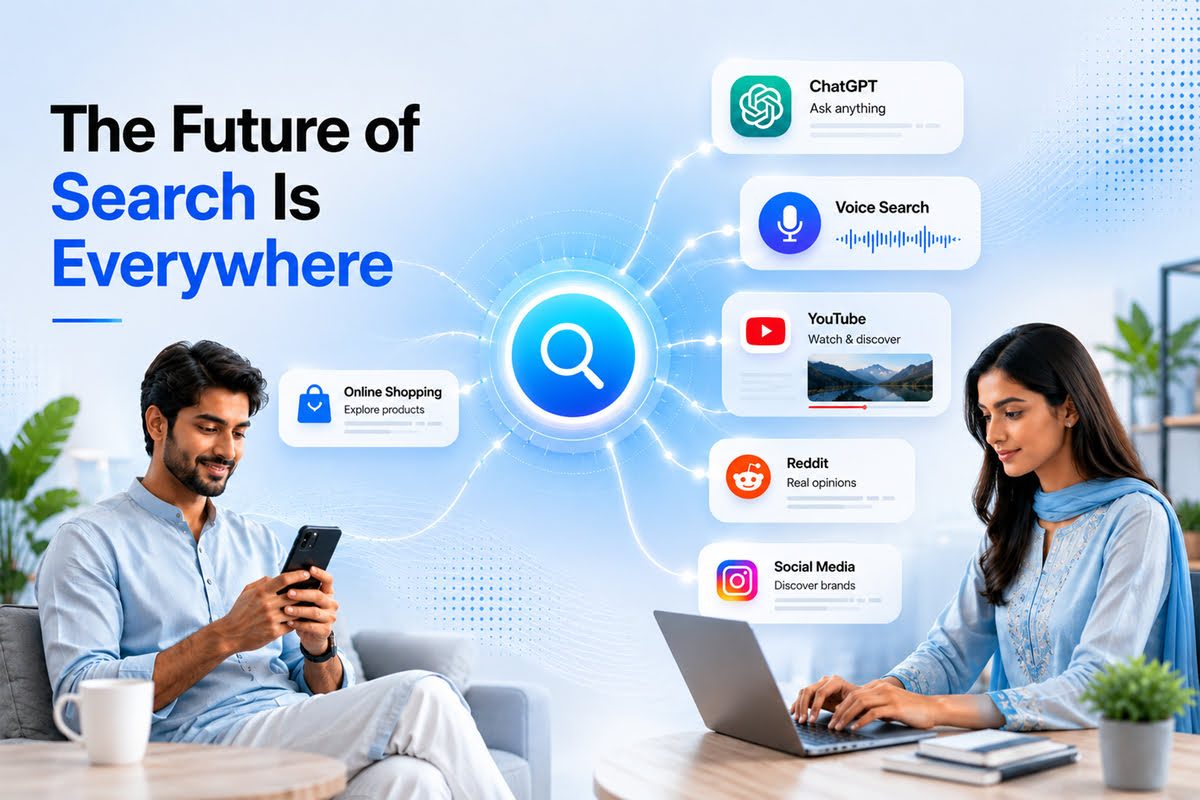
Search is no longer confined to a single search engine.
People ask ChatGPT for recommendations and use voice assistants. At the same time, on the move, people explore products through YouTube, validate opinions on Reddit, and discover brands through social platforms, all before making a decision.
The brands that succeed won't necessarily be the ones ranking #1 on Google; They'll be the ones that show up wherever their customers are searching.
That's the true power of Search Everywhere Optimization. The sooner your business embraces this shift, the better positioned you'll be for the future of search. As the best AI-based SEO agency in Karachi, we believe the future belongs to brands that prioritize visibility, not just rankings.
Contact ArtxPro to discuss your search visibility strategy.
Frequently Asked Questions
What is Search Everywhere Optimization?
It is the practice of improving brand visibility across Google, AI search engines, social media, YouTube, and other platforms where customers search.
Is Search Everywhere Optimization different from traditional SEO?
Yes. Traditional SEO focuses mainly on Google rankings, while Search Everywhere Optimization focuses on visibility across the entire digital search ecosystem.
How can I improve visibility in AI search?
Create original content, build topical authority, earn trusted mentions and citations, and provide clear answers to user questions.
Does traditional SEO still matter?
Yes. Traditional SEO remains important, but it now works alongside AI SEO and broader search visibility strategies.
Which platforms should businesses optimize for?
Focus on platforms your audience actually uses, such as Google, ChatGPT, YouTube, LinkedIn, Reddit, Instagram, and TikTok.
Digital Marketing Specialist
With a solid 12+ year background in digital marketing, Danyal delivers blogs packed with timely insights, useful tips, and impactful stories. His writing style is engaging, informative, and always rooted in real-world value for businesses and readers. From breaking down SEO strategies to exploring ecommerce trends and keeping tabs on what’s going viral online, he keeps it fresh, fun, and totally binge-worthy. If it’s worth knowing in the digital world, Danyal’s already writing about it.

An award-winning digital marketing agency dedicated to delivering effective solutions that ensure your success in the age of digital channels, screens, and trends.